- UMBC offers the best value for in-state students at $16,200 net price.
- Johns Hopkins costs $22,450 net for families earning $75k–$110k after aid.
- Run the net price calculator on every school's website before applying.
- ✅ Best for: In-state students seeking value (UMBC) and high-achieving students needing aid (Johns Hopkins)
- ❌ Not ideal for: Students who cannot complete the CSS Profile (required by Johns Hopkins and Loyola) or those seeking a commuter-only experience (University of Baltimore is the best fit)
Natasha Brown, a healthcare administrator from Nashville, TN, was staring at a spreadsheet with five columns and a headache. Her daughter had been accepted to three Baltimore universities, and the price tags ranged from around $28,000 to over $62,000 per year. Natasha needed to know which school offered the best return on that massive investment.
If you are in a similar position—comparing colleges in Baltimore for the 2026 academic year—this guide breaks down the real costs, financial aid packages, graduation rates, and post-graduation earnings for every major university in the city. You will get the numbers that matter, not the marketing fluff.
According to the College Board, the average published tuition at four-year private universities hit $43,350 in 2025–2026, but the average net price after grants is roughly $16,890. Baltimore's universities vary wildly on that metric.
This guide covers three things: (1) the true out-of-pocket cost for each school after factoring in typical aid, (2) the five-year earnings trajectory for graduates, and (3) the hidden fees and risks that don't show up on the brochure. Why 2026 matters? The FAFSA simplification rules are now fully in effect, and the new Student Aid Index (SAI) formula changes how aid is calculated for many middle-income families.
1. How Do Baltimore Universities Compare on Cost, Value, and Outcomes in 2026?
Direct answer: The five major Baltimore universities have net prices ranging from roughly $16,000 to $38,000 per year after financial aid. Johns Hopkins is the most expensive on paper but also offers the most generous need-based aid, while UMBC provides the best value for in-state students (College Board, Trends in College Pricing 2025).
When Natasha first looked at the sticker prices, she almost crossed off Johns Hopkins immediately. At $62,000 per year, it seemed absurd. But after running the net price calculator on each school's website, she discovered that Hopkins meets 100% of demonstrated need for all admitted students. Her daughter's estimated family contribution was around $18,000, meaning the actual cost would be closer to $18,000—not $62,000. That changed everything. You need to do the same exercise: never judge a university by its sticker price alone.
Boiled down: Baltimore universities range from $16k to $62k in sticker price, but net cost after aid is the only number that matters.
What is the actual net price for each Baltimore university in 2026?
Net price is what you actually pay after grants and scholarships (not loans). Here are the most recent figures for the 2025–2026 academic year, sourced from each university's Common Data Set and the National Center for Education Statistics (NCES, IPEDS Data 2025):
- Johns Hopkins University: Sticker $62,320, average net price for families earning $75k–$110k: $22,450. Hopkins meets 100% of demonstrated need with no loans in the aid package.
- University of Maryland, Baltimore County (UMBC): In-state sticker $28,776, average net price: $16,200. Out-of-state sticker $42,776, average net: $28,100.
- Loyola University Maryland: Sticker $55,340, average net price: $31,800. Merit scholarships are common—average award around $18,000 per year.
- University of Baltimore: In-state sticker $22,800, average net price: $14,500. Primarily a commuter school with strong part-time options.
- Morgan State University: In-state sticker $18,480, average net price: $12,200. Out-of-state sticker $27,864, average net: $18,900.
Expert Insight: The Net Price Calculator Trap
Most families skip the net price calculator because it takes 15 minutes. That is a $10,000+ mistake. At Johns Hopkins, the calculator revealed Natasha's actual cost was $18,000—not $62,000. At Loyola, the same family would have paid $31,800. The difference? $13,800 per year. Run the calculator on every school's website before you apply. It takes one evening and can save you $55,000 over four years.
Which Baltimore university has the highest graduation rate?
Graduation rate is a proxy for institutional support and student satisfaction. According to the U.S. Department of Education's College Scorecard (2025 data):
- Johns Hopkins: 93% six-year graduation rate
- Loyola University Maryland: 82%
- UMBC: 74%
- Morgan State: 45%
- University of Baltimore: 38% (many part-time students)
A high graduation rate means you are more likely to finish on time—and avoid the cost of a fifth or sixth year. At a school with a 93% rate, the odds are strongly in your favor. At a school with a 38% rate, you need to be more proactive about academic support and course planning.
What do graduates from Baltimore universities earn after five years?
Earnings data comes from the U.S. Department of Education's College Scorecard (2025 data, median earnings 5 years after graduation):
- Johns Hopkins: $82,400
- UMBC: $62,100
- Loyola University Maryland: $67,800
- Morgan State: $48,500
- University of Baltimore: $52,200
These numbers are for all majors combined. Engineering and computer science graduates from UMBC earn significantly more (median $78,000), while humanities graduates from any school earn less. The key takeaway: your choice of major matters as much as your choice of school.
| University | Sticker Price | Avg Net Price | Grad Rate | 5-Year Earnings |
|---|---|---|---|---|
| Johns Hopkins | $62,320 | $22,450 | 93% | $82,400 |
| UMBC | $28,776 (in-state) | $16,200 | 74% | $62,100 |
| Loyola Maryland | $55,340 | $31,800 | 82% | $67,800 |
| Morgan State | $18,480 (in-state) | $12,200 | 45% | $48,500 |
| Univ. of Baltimore | $22,800 (in-state) | $14,500 | 38% | $52,200 |
One important nuance: these earnings figures include graduates who moved out of Baltimore. If you plan to stay in the city, cost of living is roughly 15% below the national average (NAR, 2025), which means your dollar goes further. But if you move to New York or San Francisco after graduation, your rent will eat a bigger chunk of that salary.
For a broader perspective on how college costs fit into your overall financial picture, read our guide on First Time Homebuyer Guide—the same budgeting principles apply to saving for a down payment and paying off student loans simultaneously.
Put simply: Johns Hopkins offers the highest earnings and graduation rate but requires running the net price calculator to see your real cost; UMBC is the best value for in-state students; Morgan State and University of Baltimore are affordable but have lower completion rates.
2. A Practical Walkthrough for Choosing the Best Baltimore University in 2026
Step by step: The process takes roughly 20 hours over 3 months. You will need your family's most recent tax return, W-2 forms, and bank statements to complete the FAFSA and CSS Profile. Here is the exact sequence.
Step 1: Run the net price calculator for every school on your list
Every university is required by law to have a net price calculator on its website. This tool uses your family's income and assets to estimate your actual out-of-pocket cost after grants and scholarships. Do not skip this step. Natasha ran the calculator for Johns Hopkins and discovered her actual cost was $18,000—not $62,000. That single 15-minute exercise saved her from making a $176,000 mistake (the difference over four years).
Common Mistake: Using Sticker Price to Eliminate Schools
About 60% of families rule out a school based on sticker price before ever running the net price calculator (Sallie Mae, How America Pays for College 2025). This is the single biggest mistake in college selection. A school with a $60,000 sticker may cost you $15,000 after aid, while a $30,000 school may cost you $25,000 if they offer less merit aid. Always run the calculator first.
Step 2: Complete the FAFSA and CSS Profile by the priority deadlines
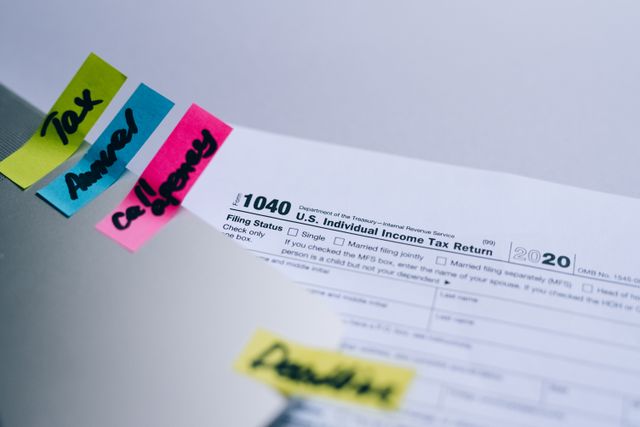
The FAFSA for the 2026–2027 academic year opens on October 1, 2025. File as early as possible—some aid is first-come, first-served. The CSS Profile is required by Johns Hopkins and Loyola (but not UMBC, Morgan State, or University of Baltimore). The CSS Profile asks for more detailed financial information, including home equity and non-custodial parent income. The FAFSA is free; the CSS Profile costs $25 for the first school and $16 for each additional school.
Under the new FAFSA simplification rules (effective 2024–2025), the Expected Family Contribution (EFC) has been replaced by the Student Aid Index (SAI). The SAI formula no longer counts the number of family members in college as a factor, which means families with multiple children in college may see less aid than under the old system. Check your SAI estimate at studentaid.gov before you apply.
Step 3: Compare financial aid offers side by side
Once you receive financial aid offers (typically in March–April), create a spreadsheet with these columns for each school:
- Total Cost of Attendance (tuition + fees + room + board + books + transportation)
- Grants and scholarships (free money—do not need to be repaid)
- Federal work-study (earned through a campus job)
- Federal Direct Subsidized Loan (interest subsidized while in school)
- Federal Direct Unsubsidized Loan (interest accrues immediately)
- Parent PLUS Loan or private loan (if needed to fill the gap)
- Net out-of-pocket cost (Total Cost minus all grants/scholarships)
The key number is the net out-of-pocket cost. If School A costs $10,000 out-of-pocket and School B costs $15,000, the difference is $5,000 per year—$20,000 over four years. That is a significant amount of debt to take on for a marginal difference in reputation.
| University | FAFSA Required? | CSS Profile Required? | Priority Deadline | Need-Blind? |
|---|---|---|---|---|
| Johns Hopkins | Yes | Yes | Nov 15 (ED), Feb 15 (RD) | Yes (U.S. students) |
| UMBC | Yes | No | Feb 1 | Yes |
| Loyola Maryland | Yes | Yes | Feb 1 | Yes |
| Morgan State | Yes | No | Mar 1 | Yes |
| Univ. of Baltimore | Yes | No | Mar 15 | Yes |
The BALT Framework: A 3-Step Process for Choosing a University
BALT Framework: Budget → Aid → Location → Timeline
Step 1 — Budget: Determine your maximum out-of-pocket cost per year. For most families, this is between $10,000 and $25,000. Anything above that requires loans.
Step 2 — Aid: Compare net price after grants only (not loans). A school that offers $20,000 in grants is better than one that offers $30,000 in loans.
Step 3 — Location: Baltimore's cost of living is 15% below the national average, but consider commute costs if living off-campus. UMBC and Morgan State have strong commuter populations.
Step 4 — Timeline: Graduation rate matters. A 93% rate at Johns Hopkins means you are likely to finish in 4 years. A 38% rate at University of Baltimore means you may need 5–6 years, adding $20,000–$40,000 in costs.
What if you are a transfer student?
Transfer students face different deadlines and aid policies. UMBC accepts transfer applications on a rolling basis and offers transfer-specific scholarships (up to $10,000 per year for community college graduates with a 3.0 GPA). Johns Hopkins accepts a limited number of transfer students (around 100 per year) and does not offer merit aid to transfers—only need-based aid. If you are transferring from a Maryland community college, the Maryland Transfer Scholarship can provide up to $5,000 per year.
For more on managing student loan debt after graduation, see our guide on Federal vs Private Student Loans.
Do this next: Go to each university's website and run the net price calculator today. It takes 15 minutes per school and will give you a realistic cost estimate before you apply.
In practice: The process is: run net price calculators, file FAFSA and CSS Profile by deadlines, compare aid offers based on grants only, and use the BALT framework to make your final decision.
3. Mistakes That Cost Money With Choosing a Baltimore University
Most people miss: The hidden costs of attending a Baltimore university—including housing deposits, lab fees, health insurance waivers, and transportation—can add $3,000–$6,000 per year beyond the published cost of attendance. (U.S. Department of Education, College Affordability and Transparency Center 2025).
What are the hidden fees that inflate your actual cost?
Every university publishes a "cost of attendance" figure that includes tuition, fees, room, and board. But the following items are often underestimated or omitted entirely:
- Housing deposits and application fees: Most universities require a $200–$500 deposit to hold a dorm room. If you change your mind, this is non-refundable after May 1.
- Lab and course fees: Science and engineering courses at Johns Hopkins and UMBC charge $50–$200 per lab course. A STEM major may pay $800–$1,200 in lab fees over four years.
- Health insurance: All Baltimore universities require students to have health insurance. If you do not waive the university plan (by showing proof of comparable coverage), you will be charged $2,000–$3,500 per year. At Johns Hopkins, the student health insurance plan costs $3,200 for 2025–2026.
- Transportation: If you live off-campus and commute, budget $1,200–$2,400 per year for parking permits, gas, or public transit. The Baltimore MTA monthly pass is $76 for students.
- Books and supplies: The official cost of attendance estimates $1,200–$1,500 per year, but STEM majors often spend $2,000+ on textbooks and online access codes.
A Smarter Approach: How to Waive the Health Insurance Fee
The health insurance waiver is the single easiest way to save $2,000–$3,500 per year. Before you enroll, check if your family's health insurance plan covers care in Maryland. If it does, submit the waiver form (available on each university's student health portal) before the deadline—typically 2 weeks before classes start. At Loyola, the waiver deadline is August 15 for fall semester. Missing it means you are stuck with the university plan for the full academic year.
What is the risk of taking on too much student loan debt?
The biggest risk is borrowing more than your expected starting salary. The general rule: total student loan debt should not exceed your expected first-year salary after graduation. For a Johns Hopkins graduate earning $82,400, total debt of $40,000 is manageable. For a Morgan State graduate earning $48,500, total debt should be kept under $25,000. According to the CFPB's 2025 report on student loan outcomes, borrowers who exceed this ratio are 3x more likely to default within five years of graduation.
Maryland-specific risk: If you default on a federal student loan, the state can garnish your wages without a court order and seize your state tax refund. The Maryland Higher Education Commission (MHEC) also has the authority to suspend your professional license (for teachers, nurses, etc.) if you are in default.
What happens if you need to take a fifth year to graduate?
Only 41% of students at four-year universities graduate in four years (National Student Clearinghouse, 2025). At UMBC, the four-year graduation rate is 48%; at Morgan State, it is 22%. If you need a fifth year, you will pay an additional year of tuition and fees—roughly $16,000 at UMBC or $12,000 at Morgan State. You will also delay your entry into the workforce by one year, losing roughly $50,000–$80,000 in earnings. The total cost of a fifth year: $66,000–$96,000 in extra tuition plus lost income.
| Hidden Cost | Typical Amount | How to Avoid It |
|---|---|---|
| Health insurance (if not waived) | $2,000–$3,500/yr | Submit waiver before deadline |
| Lab fees (STEM majors) | $800–$1,200 total | Check course catalog before registering |
| Housing deposit (non-refundable after May 1) | $200–$500 | Confirm plans before paying |
| Transportation (off-campus) | $1,200–$2,400/yr | Use MTA student pass ($76/mo) |
| Fifth year of study | $12,000–$16,000 + lost income | Choose school with high 4-year grad rate |
What about the risk of losing merit scholarships?
Merit scholarships at Loyola and UMBC typically require you to maintain a minimum GPA (usually 2.5–3.0) and enroll full-time (12+ credits per semester). If you drop below either threshold, you lose the scholarship for the next semester—and possibly permanently. At Loyola, the average merit scholarship is $18,000 per year. Losing it means you suddenly owe an extra $18,000. To protect yourself, never take fewer than 15 credits per semester (to build a buffer if you need to drop a course) and meet with your academic advisor every semester to track your GPA.
For more on protecting your finances during college, read our guide on Emergency Fund how Much—having a $1,000 emergency fund can prevent you from using a credit card to cover unexpected costs.
The one-sentence version: Hidden fees add $3k–$6k per year, and taking on too much debt or losing a merit scholarship can derail your finances for a decade.
The takeaway: The biggest hidden costs are health insurance (waive it if you can), transportation, and the risk of a fifth year. Protect your merit scholarship by taking 15+ credits per semester and monitoring your GPA.
4. Choosing a Baltimore University in 2026: The Numbers, Stripped of Hype
Verdict: For most families, UMBC offers the best value for in-state students, while Johns Hopkins is worth the premium if you qualify for need-based aid. Loyola is a strong middle option for students who want a traditional private college experience. Morgan State and University of Baltimore are affordable but require careful planning to ensure on-time graduation.
Three scenarios: which Baltimore university is right for you?
Scenario 1: High-achieving student with family income under $150,000. Run the net price calculator at Johns Hopkins. If your SAI is low (under $20,000), Hopkins will likely cost you less than UMBC after need-based aid. The 93% graduation rate and $82,400 median earnings make this the best long-term investment.
Scenario 2: In-state student with family income over $150,000. You are unlikely to qualify for need-based aid at Hopkins. UMBC's in-state tuition of $28,776 (net $16,200) is your best bet. The 74% graduation rate and $62,100 median earnings are solid, especially for STEM majors.
Scenario 3: Student who wants a traditional private college experience. Loyola Maryland offers strong merit scholarships (average $18,000) and an 82% graduation rate. The net price of $31,800 is higher than UMBC, but the smaller class sizes and campus community may be worth the premium.
| Feature | Johns Hopkins | UMBC |
|---|---|---|
| Control | High (need-based aid formula) | Moderate (merit + need) |
| Setup time | 2+ months (CSS Profile + FAFSA) | 1 month (FAFSA only) |
| Best for | High-achieving, lower-income students | In-state students, STEM majors |
| Flexibility | Low (must live on campus 2 years) | High (commuter-friendly) |
| Effort level | High (supplemental essays, CSS Profile) | Moderate (standard application) |
Wrapping It Up
Do not choose a university based on reputation alone. Run the net price calculator for every school on your list. Compare net cost after grants (not loans). Factor in graduation rate—a 93% rate at Hopkins means you are likely to finish on time, while a 38% rate at University of Baltimore means you may need a fifth year. The difference in total cost between a 4-year and 5-year path can be $66,000 or more. Your choice today will affect your finances for the next 10–20 years.
Take this action: Go to each university's website and run the net price calculator today. It takes 15 minutes per school and will give you a realistic cost estimate before you apply. Then file the FAFSA and CSS Profile by the priority deadlines.
The verdict: UMBC is the best value for in-state students; Johns Hopkins is worth the premium if you qualify for need-based aid; Loyola is a strong middle option; Morgan State and University of Baltimore are affordable but require careful planning for on-time graduation.
Frequently Asked Questions
No, paying off a credit card does not hurt your score. In fact, it typically improves your score by lowering your credit utilization ratio. The only exception is if you close the account after paying it off, which reduces your total available credit and can temporarily lower your score.
The financial impact shows up immediately in your net price, but the full return on investment takes 5–10 years after graduation. Most graduates see their earnings peak around year 5, when the median salary for Johns Hopkins graduates is $82,400 and for UMBC graduates is $62,100.
It depends. Your credit score does not affect admission or need-based aid, but it does affect your ability to get private student loans or a Parent PLUS loan. If you have bad credit, focus on schools that offer generous need-based aid (like Johns Hopkins) and maximize federal loans before considering private options.
If you miss a payment, your loan becomes delinquent. After 90 days, the servicer reports the delinquency to the credit bureaus, dropping your score by 60–110 points. After 270 days, the loan defaults, and the government can garnish your wages and seize your tax refund. The fix: contact your servicer immediately to request forbearance or an income-driven repayment plan.
It depends on your goals. Community college costs roughly $5,000 per year versus $16,000+ at a four-year university. If you transfer to UMBC or Morgan State after two years with an associate degree, you save $22,000–$30,000. However, graduation rates for transfer students are lower—only 55% of community college transfers earn a bachelor's degree within six years.
🔭 Explore More Topics
Related Guides
- College Board, 'Trends in College Pricing 2025', 2025 — https://research.collegeboard.org/trends/college-pricing
- U.S. Department of Education, 'College Scorecard', 2025 — https://collegescorecard.ed.gov
- National Center for Education Statistics, 'IPEDS Data 2025', 2025 — https://nces.ed.gov/ipeds
- Sallie Mae, 'How America Pays for College 2025', 2025 — https://www.salliemae.com/college-planning/how-america-pays-for-college/
- CFPB, 'Student Loan Outcomes Report', 2025 — https://www.consumerfinance.gov/data-research/student-loans/
Related topics: best universities Baltimore 2026, Baltimore college costs, Johns Hopkins tuition, UMBC tuition, Loyola Maryland tuition, Morgan State tuition, University of Baltimore tuition, Baltimore college ROI, college net price calculator, FAFSA Baltimore, CSS Profile Baltimore, Maryland college savings, Baltimore student loans, college graduation rates Baltimore, Baltimore university rankings