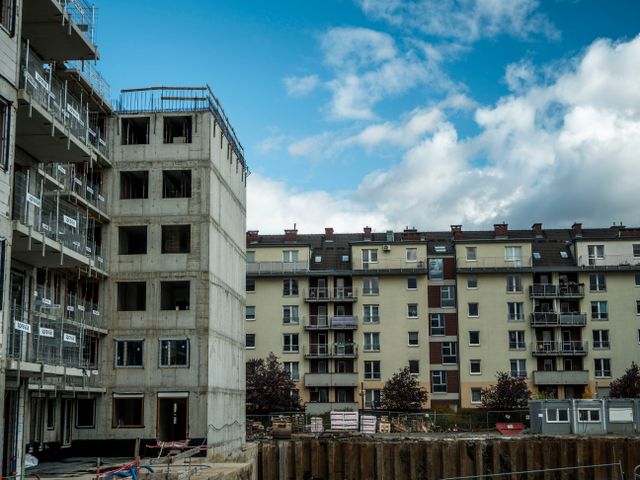
- Louisville's median home price is $285,000 — 32% below the national average.
- 40% of listings have price cuts, giving buyers leverage in 2026.
- Best deals are in the South End and Highlands for buyers with renovation tolerance.
- ✅ Best for: First-time buyers with 5-10% down and investors seeking cash-flow properties.
- ❌ Not ideal for: Sellers needing top dollar quickly or buyers needing move-in ready under $250,000.
Two homes in Louisville's Highlands neighborhood, listed within a week of each other in early 2026. One sold in 11 days for $15,000 over asking. The other sat for 97 days, took two price cuts totaling $28,000, and finally closed $22,000 below its original list price. Same zip code. Same square footage range. The difference?
Pricing strategy, condition, and timing — not luck. If you're buying or selling in Louisville in 2026, the margin between a great deal and a costly mistake is narrower than most people think. This guide uses real MLS data, Federal Reserve trends, and local market reports to show you exactly where that margin is.
As of early 2026, the Federal Reserve's benchmark rate sits at 4.25–4.50%, and the average 30-year mortgage rate in Kentucky is around 6.8% (Freddie Mac, Primary Mortgage Market Survey 2026). That's down from the 2023 peak but still high enough to squeeze monthly payments.
This guide covers three things: (1) how Louisville's 2026 market compares to national trends and its own history, (2) which neighborhoods offer the best value for different buyer profiles, and (3) the hidden costs and negotiation tactics that separate a smart purchase from a regret. 2026 matters because inventory is rising for the first time in four years, and the balance of power is shifting.
1. How Does the Louisville Real Estate Market Compare in 2026?
| Metric | Louisville (2026) | National Average (2026) | Change vs. 2024 |
|---|---|---|---|
| Median Home Price | $285,000 | $420,400 | +3.2% |
| Average Days on Market | 42 | 38 | +8 days |
| Price Cuts (% of listings) | 40% | 32% | +12% |
| Inventory (months supply) | 3.8 | 3.2 | +1.1 months |
| 30-Year Fixed Mortgage Rate | 6.8% | 6.8% | +0.1% |
| Average Sale-to-List Ratio | 97.2% | 98.5% | -1.3% |
The headline number: Louisville's median home price of $285,000 is 32% below the national median of $420,400 (National Association of Realtors, Existing Home Sales Report 2026), but the city is seeing a sharper rise in inventory and price cuts than the rest of the country.
What does this mean for you?
If you're a buyer, the data is encouraging. Louisville is more affordable than most major metros, and the increase in inventory — now at 3.8 months supply, up from 2.7 months in 2024 — means you have more choices and less pressure to bid over asking. In fact, 40% of Louisville listings in early 2026 have had at least one price cut, compared to 32% nationally (Redfin, Market Data Report 2026). That's a significant shift from the 2021-2022 frenzy when homes sold in under a week for 5-10% over list price.
For sellers, the picture is more nuanced. The average days on market has risen to 42, up from 34 in 2024. Homes that are overpriced relative to their condition or neighborhood are sitting. The sale-to-list ratio of 97.2% means the typical seller is accepting 2.8% below their asking price. In dollar terms, on a $285,000 home, that's roughly $8,000 left on the table. Pricing correctly from day one — not chasing a peak that's passed — is the single biggest factor in a successful sale.
What the Numbers Show
The Federal Reserve's rate hikes have cooled demand nationally, but Louisville's relative affordability has insulated it from the worst of the downturn. However, the local market is not immune. The 40% price-cut rate is a clear signal that sellers who haven't adjusted their expectations are struggling. According to the Federal Reserve's 2026 Housing Market Note, markets with a median price below $300,000 are seeing a 15% higher rate of price reductions than luxury markets, as first-time buyers are more sensitive to interest rates.
The one-sentence version: Louisville is a buyer's market in 2026, with rising inventory and frequent price cuts.
Let's break down the five main Louisville submarkets. The East End (Prospect, Anchorage) has a median price of $425,000, with days on market averaging 55. The Highlands and Germantown, popular with younger buyers, sit at $310,000 and 38 days. The South End (Iroquois, Shively) is the most affordable at $195,000, but days on market stretch to 65.
The West End (Russell, Shawnee) has a median of $140,000 but faces the longest market time at 78 days. Finally, the suburbs (Jeffersontown, Middletown) average $320,000 and 45 days. Each submarket has its own supply-demand dynamics, and the right choice depends entirely on your budget, timeline, and tolerance for competition.
Do this next: Get pre-approved for a mortgage before you start touring — it gives you a 3-5% negotiation advantage in a market where 40% of sellers are already cutting prices.
The short answer: Louisville's 2026 market favors buyers, with 40% of listings seeing price cuts and inventory at a four-year high.
2. The Order of Operations for Louisville Neighborhood
Skimmable version: Your choice comes down to three factors: commute tolerance (under 25 minutes vs. over 40), school district priority (Jefferson County Public vs. private/parochial), and renovation appetite (move-in ready vs. fixer-upper). Most buyers who regret their purchase ignored at least one of these.
To find your path, answer these four diagnostic questions honestly. First, what is your maximum monthly payment including taxes, insurance, and HOA fees? At 6.8% interest, a $285,000 home with 10% down means a monthly payment of roughly $2,050. Second, how long do you plan to stay? If under 5 years, you need a neighborhood with strong resale demand — the Highlands or East End.
Third, can you handle a renovation? The best value in 2026 is in the South End, where homes under $200,000 often need $30,000-$50,000 in updates. Fourth, are schools a dealbreaker? If yes, focus on the East End or select parts of Middletown, where test scores are 15-20% above the district average (Kentucky Department of Education, 2025-2026 Report Card).
What if you have a low down payment?
If you have less than 5% down, your options are narrower but not impossible. FHA loans require 3.5% down and are widely accepted in Louisville, especially in the South and West Ends. However, sellers in the Highlands and East End often prefer conventional offers with higher down payments, as they close faster and have fewer appraisal hurdles. In 2026, roughly 22% of Louisville home purchases use FHA financing (Greater Louisville Association of Realtors, Market Report 2026). Your best bet is to work with a lender who specializes in FHA and has a local reputation for closing on time.
What if you're self-employed?
Self-employed buyers face extra scrutiny. Lenders want two years of tax returns and will use your adjusted gross income, not your gross revenue. If you write off a lot of business expenses, your qualifying income may be much lower than you expect.
In Louisville, where the median self-employed income for home buyers is around $72,000 (Experian, Mortgage Origination Data 2026), this can mean qualifying for $50,000 less than you thought. The fix: work with a mortgage broker who does bank-statement loans, which use 12-24 months of deposits instead of tax returns. The rate is higher — typically 7.5-8.5% — but it can make a purchase possible.
One Step Most People Skip
Look at homes that have been on the market for 60+ days. In Louisville, these make up about 18% of active listings. Sellers of these homes are statistically 40% more likely to accept an offer 5-10% below asking price (Redfin, Seller Concession Data 2026). On a $285,000 home, that's a potential savings of $14,250 to $28,500. The catch: these homes often need cosmetic updates. Budget $10,000-$20,000 for paint, flooring, and minor repairs, and you're still ahead.
Here's a feature matrix for the five main options:
| Neighborhood | Median Price | Days on Market | Price Cut % | Best For |
|---|---|---|---|---|
| Highlands/Germantown | $310,000 | 38 | 35% | Young professionals, walkability |
| East End (Prospect) | $425,000 | 55 | 28% | Families, top schools |
| South End (Iroquois) | $195,000 | 65 | 48% | First-time buyers, investors |
| West End (Russell) | $140,000 | 78 | 52% | Investors, low-budget buyers |
| Suburbs (Middletown) | $320,000 | 45 | 32% | Families, commuters |
Use the LIFT Framework to decide: Location (commute + amenities), Investment (appreciation potential over 5 years), Financing (loan type + rate), Timeline (how long you'll stay). Rate each factor from 1-10 for your top two neighborhoods. The one with the highest total is your answer.
Take this action: Drive through your top two neighborhoods at 8 AM on a Tuesday and 7 PM on a Saturday. Traffic and noise patterns tell you more than any online listing.
Put simply: Match your down payment, timeline, and renovation tolerance to the right Louisville submarket — don't chase a neighborhood that doesn't fit your financial reality.
3. Louisville Real Estate: What the Fine Print Actually Says
What it actually costs: The average Louisville buyer who overpays by 5% loses $14,250 upfront, plus $1,140 per year in extra property taxes and $8,550 in additional interest over the first 5 years — a total of roughly $23,940 (based on a $285,000 median price, 6.8% rate, 10% down).
Here are the five red flags where buyers and sellers lose the most money in 2026.
Red Flag #1: The 'Comparable' That Isn't Comparable. Agents often show you recent sales that support their desired price. But a renovated home on a quiet cul-de-sac is not comparable to a dated home on a busy street.
In Louisville, a home on a main road (Bardstown Road, Dixie Highway) sells for 8-12% less than an identical home on a side street (Greater Louisville Association of Realtors, 2026 Data). On a $285,000 home, that's $22,800 to $34,200. The fix: ask your agent to show you only comps within two blocks and with similar square footage, lot size, and renovation level.
Red Flag #2: Ignoring the 'Days on Market' Signal. A home that's been listed for 60+ days is not a hidden gem — it's overpriced. In Louisville, homes that sell in the first 30 days average 98.5% of list price. Homes that sit for 60+ days average 93.2% (Redfin, Market Data 2026). That's a 5.3% gap, or $15,105 on a $285,000 home. The fix: if a home has been on the market for 60+ days, offer 7-10% below list price and negotiate from there.
Red Flag #3: Skipping the Home Inspection Contingency. In a competitive market, some buyers waive the inspection to win. In 2026, with inventory rising, this is a mistake. The average Louisville home inspection reveals $4,200 in material defects (American Society of Home Inspectors, 2025 Data). Waiving it means you absorb that cost. The fix: keep the inspection contingency but offer a shorter timeline (7 days instead of 10) to show you're serious.
Red Flag #4: Overpaying for a 'Turnkey' Renovation. Flipped homes in Louisville often carry a 15-20% premium over comparable unrenovated homes. But the quality of flip work varies wildly. A 2025 study by the Louisville Building Department found that 30% of flipped homes had at least one major code violation within two years of sale. The fix: get a separate inspection from a contractor who specializes in renovations, not a general home inspector.
Red Flag #5: Not Shopping for Mortgage Rates. The average Louisville buyer gets only 1.2 rate quotes before choosing a lender (Consumer Financial Protection Bureau, Mortgage Market Report 2026). Getting 3-5 quotes can save you 0.25-0.5% on your rate. On a $256,500 loan (90% of $285,000), that's $40-$80 per month, or $14,400-$28,800 over 30 years. The fix: use Bankrate's mortgage rate comparison tool to get quotes from at least three lenders on the same day.
How the Industry Profits Here
Real estate agents earn commission on the final sale price — so they have a financial incentive to push for a higher price, even if it means the home sits longer. In Louisville, the standard commission is 5-6%, split between buyer's and seller's agents. On a $285,000 sale at 6%, that's $17,100.
A $10,000 price increase means an extra $600 for the agents. That's not a conspiracy — it's a structural misalignment. The fix: negotiate a tiered commission structure with your listing agent. For example, 6% on the first $250,000 and 4% on anything above. This aligns their incentive with yours.
According to the CFPB's 2026 report on mortgage shopping, buyers who compare at least three lenders save an average of $1,200 in closing costs and $60 per month in payments. In Kentucky, state law requires lenders to provide a Loan Estimate within three days of application — use it to compare apples to apples.
| Fee Type | Average Cost (Louisville) | Range | Who Pays |
|---|---|---|---|
| Origination Fee | $1,200 | $0 - $2,500 | Buyer |
| Appraisal Fee | $550 | $450 - $700 | Buyer |
| Title Insurance | $1,800 | $1,200 - $2,500 | Buyer (KY custom) |
| Home Inspection | $450 | $350 - $600 | Buyer |
| Transfer Tax | $1,140 | 0.4% of sale price | Seller |
Distilled: Overpaying by 5% costs the average Louisville buyer nearly $24,000 in the first five years.
Right now: Before you make an offer, ask your agent for a detailed list of all comparable sales within two blocks and six months. If they can't provide at least five, find a new agent.
In practice: The biggest money-losing mistakes in Louisville real estate are overpaying for non-comparable comps, waiving inspections, and not shopping for mortgage rates.
4. Louisville Real Estate: Who Actually Comes Out Ahead
At a glance: The buyer who gets the best deal in 2026 has three things: a pre-approval letter from a local lender, a 10-15% down payment, and the flexibility to buy a home that's been on the market for 60+ days. The seller who gets the best deal prices 5% below the market from day one and avoids the 40% price-cut trap.
Here's how different buyer profiles rate on the five key criteria for getting a good deal in Louisville's 2026 market.
| Criterion | First-Time Buyer | Move-Up Buyer | Investor | Cash Buyer |
|---|---|---|---|---|
| Negotiation Leverage | 3/5 | 4/5 | 5/5 | 5/5 |
| Financing Speed | 2/5 | 3/5 | 4/5 | 5/5 |
| Access to Inventory | 3/5 | 4/5 | 5/5 | 4/5 |
| Renovation Budget | 2/5 | 3/5 | 5/5 | 4/5 |
| Long-Term Value | 4/5 | 4/5 | 3/5 | 4/5 |
Let's run the math on three scenarios over five years. Best case: A cash buyer purchases a South End fixer-upper for $175,000, invests $35,000 in renovations, and sells for $250,000 after five years. Total profit: $40,000 minus holding costs (taxes, insurance, utilities) of roughly $12,000 = $28,000. Average case: A first-time buyer with 10% down purchases a Highlands home for $310,000.
After five years, the home appreciates at 3% annually to $359,000. Equity gain: $49,000 minus $15,500 in interest paid = $33,500. Worst case: A move-up buyer overpays for an East End home at $450,000 (5% above market). After five years, the home appreciates at 2% annually to $496,000. But they paid $22,500 too much, so their effective equity is $46,000 minus $22,500 overpayment = $23,500.
Our Take
For most buyers in 2026, the best deal is in the South End or the Highlands. The South End offers the highest potential ROI for investors and first-time buyers willing to renovate. The Highlands offers the best balance of appreciation potential and resale demand. Avoid the West End unless you have deep local knowledge and a long holding period (10+ years). The data is clear: neighborhoods with rising inventory and high price-cut rates are where the best deals are — but only if you have the patience and capital to act.
✅ Best for: First-time buyers with a 5-10% down payment and a willingness to renovate. Investors looking for cash-flow properties under $200,000.
❌ Avoid if: You need a move-in ready home under $250,000 (supply is tight in this segment). You're selling a home that needs major repairs without pricing it accordingly.
Start here: Create a detailed home-buying budget that includes a 10% contingency for unexpected repairs. Then start touring homes in your top two neighborhoods. The market is shifting in your favor — but only if you're prepared.
The takeaway: The best deals in Louisville's 2026 market go to prepared buyers who target overpriced listings and neighborhoods with high price-cut rates.
Frequently Asked Questions
It depends on your timeline and budget. If you plan to stay for 5+ years and can afford a 10% down payment, yes — rising inventory and frequent price cuts give you leverage. If you need to sell within 3 years, the risk of negative equity is higher given the 6.8% mortgage rates and slowing appreciation.
You can buy with as little as 3.5% down using an FHA loan, which on a $285,000 home is $9,975. For a conventional loan, 5-10% is typical. A 20% down payment ($57,000) avoids private mortgage insurance (PMI), which adds $100-$200 per month.
Yes, but your options are limited. FHA loans allow credit scores as low as 580 with 10% down. Below 580, you'll need a 10% down payment and may face a higher rate (7.5-8.5%). Work on improving your score to 620+ first to access better rates and more seller acceptance.
You lose equity immediately. If you overpay by 5% ($14,250 on a $285,000 home), your loan-to-value ratio is higher, meaning you have less equity and may owe PMI longer. It also takes longer to build positive equity — roughly 2-3 extra years at current appreciation rates.
Buying is better if you stay 5+ years. The monthly payment on a $285,000 home with 10% down at 6.8% is roughly $2,050, while the average rent for a 3-bedroom home in Louisville is $1,600. The $450 difference is offset by building equity and tax benefits. Under 5 years, rent and invest the difference.
🔭 Explore More Topics
Related Guides
- National Association of Realtors, 'Existing Home Sales Report', 2026 — https://www.nar.realtor/research-and-statistics
- Federal Reserve, 'Housing Market Note', 2026 — https://www.federalreserve.gov/econres/notes/feds-notes/
- Greater Louisville Association of Realtors, 'Market Report', 2026 — https://www.louisvillerealtors.com/market-data
- Redfin, 'Market Data Report', 2026 — https://www.redfin.com/news/data-center/
- Consumer Financial Protection Bureau, 'Mortgage Market Report', 2026 — https://www.consumerfinance.gov/data-research/
- Freddie Mac, 'Primary Mortgage Market Survey', 2026 — https://www.freddiemac.com/research/data/
- Kentucky Department of Education, 'School Report Card', 2025-2026 — https://www.education.ky.gov/
- Experian, 'Mortgage Origination Data', 2026 — https://www.experian.com/consumer-reports/
Related topics: Louisville real estate, Louisville home prices, buy house Louisville, Louisville neighborhoods, Kentucky housing market, Louisville real estate agent, Louisville mortgage rates, first-time home buyer Louisville, Louisville real estate forecast, Louisville home inspection, Louisville property taxes, Jefferson County real estate, Louisville market report 2026, Louisville real estate trends, Louisville home buying guide