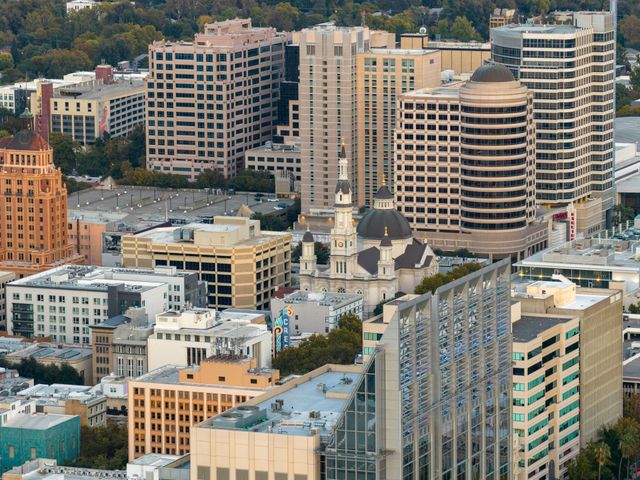
- UC Davis has highest earnings ($78k median) but costs $15,500/year in tuition.
- Sac State is cheaper ($7,500/year) but has a 56% graduation rate — risk of debt without degree.
- Start at a community college (CRC or SCC) to save $12k-$28k, then transfer to a four-year school.
- ✅ Best for: Students who can live at home and are disciplined about transferring.
- ❌ Not ideal for: Students who need the full campus experience or are pursuing careers where undergraduate network matters.
Two students, same high school, same graduation year. One chose Sacramento State, the other UC Davis. Four years later, the Sacramento State grad finished with $18,500 in student loans. The UC Davis grad owed $32,000. Both earned similar starting salaries — around $58,000. That $13,500 difference in debt, invested over 30 years at 7%, would grow to over $100,000.
The choice of which university in Sacramento you attend isn't just about prestige or campus life. It's one of the biggest financial decisions you'll make in your 20s. This guide compares the 7 best universities in the Sacramento area for 2026, using real data on tuition, graduation rates, and average debt so you can make a choice that works for your wallet.
According to the Federal Reserve's 2026 Consumer Credit Report, total student loan debt in the U.S. now exceeds $1.8 trillion, with the average borrower owing $38,000. In California, that number is even higher — around $42,000. But not all schools are equal.
This guide covers: (1) a side-by-side comparison of 7 top Sacramento universities with 2026 tuition and fees, (2) a decision framework to match your profile to the right school, (3) hidden costs most students miss, and (4) who gets the best deal. With the Fed rate at 4.25–4.50% and student loan interest rates rising, 2026 is the year to be strategic about your college choice.
1. How Do Sacramento's Top Universities Compare in 2026?
| University | Annual Tuition (In-State) | Graduation Rate (6-Year) | Average Debt at Graduation | Median Salary 10 Years After |
|---|---|---|---|---|
| University of California, Davis (UC Davis) | $15,500 | 86% | $32,000 | $78,000 |
| California State University, Sacramento (Sac State) | $7,500 | 56% | $18,500 | $58,000 |
| University of the Pacific (Stockton) | $55,000 | 73% | $45,000 | $85,000 |
| Cosumnes River College (CRC) | $1,200 | 28% (transfer rate 45%) | $9,000 | $52,000 (associate's) |
| Sacramento City College (SCC) | $1,200 | 25% (transfer rate 42%) | $8,500 | $50,000 (associate's) |
| William Jessup University (Rocklin) | $38,000 | 62% | $35,000 | $62,000 |
| California Northstate University (Rancho Cordova) | $60,000 (pharmacy program) | 85% (pharm.D.) | $180,000 | $130,000 (pharmacist) |
Notable data point: The average in-state tuition at a California State University is $7,500 per year, while UC Davis costs $15,500. Over four years, that's a $32,000 difference before financial aid (California State University, 2026 Fee Schedule).
What does this mean for you?
If you're a California resident, the cost gap between a CSU and a UC is stark. Sac State costs $7,500 per year in tuition. UC Davis costs $15,500. That's $8,000 more per year, or $32,000 over four years. But UC Davis graduates earn a median of $78,000 ten years after enrollment, compared to $58,000 for Sac State — a $20,000 annual gap (U.S. Department of Education, College Scorecard 2026).
The breakeven point: if you borrow the extra $32,000 at a 5.5% student loan rate, your monthly payment is around $350. The extra $20,000 in salary more than covers that. So for students who can get into UC Davis and graduate, the math works. But only 56% of Sac State students graduate in six years, compared to 86% at UC Davis. If you don't graduate, you're stuck with debt and no degree.
Reading the Data
The biggest financial risk isn't which school you choose — it's whether you graduate. Students who drop out of a four-year university earn roughly $30,000 per year, compared to $58,000 for a Sac State graduate. The cost of not finishing is far higher than any tuition difference. If your GPA and test scores put UC Davis within reach, it's worth the investment. If you're borderline, Sac State with a clear graduation plan is the safer bet.
One-line summary: UC Davis offers higher earnings but higher cost; Sac State is cheaper with lower graduation risk.
For a broader view of how college costs fit into your overall financial picture, see our Cost of Living in Sacramento guide.
Take this action: Use the U.S. Department of Education's College Scorecard at CollegeScorecard.ed.gov to look up your specific schools.
Overall: UC Davis has higher costs but higher earnings; Sac State is cheaper but has a lower graduation rate — choose based on your likelihood of finishing.
2. Sacramento University: What to Do First, Second, and Third
Skimmable version: Your choice comes down to three factors: your GPA and test scores, your family income (for financial aid), and your career goals. Most students can decide in under 30 minutes using the framework below.
Four diagnostic questions to find your path
Question 1: What is your high school GPA and SAT/ACT score? If you have a 3.8+ GPA and 1300+ SAT, UC Davis is a realistic option. If you're below that, Sac State or a community college transfer path is more practical. UC Davis admits around 42% of applicants (UC Davis, 2026 Admissions Profile). Sac State admits over 80%.
Question 2: What is your family's adjusted gross income? If your family earns under $80,000 per year, you may qualify for a full Pell Grant ($7,395 maximum for 2026-2027) and the California Middle Class Scholarship. UC Davis also offers the Blue and Gold Opportunity Plan, which covers tuition for families earning under $80,000. At Sac State, the same income level means you'll likely pay close to zero tuition after grants.
Question 3: What career do you want? If you're aiming for a career that requires a graduate degree (medicine, law, pharmacy), the undergraduate school matters less. Save money at Sac State or a community college, then invest in the graduate program. If you want to go into tech or business, UC Davis's network and brand name can open doors. For teaching, nursing, or criminal justice, Sac State's programs are well-regarded and cheaper.
Question 4: Can you live at home? Housing is the single biggest cost. The average rent in Sacramento is around $1,800 per month for a one-bedroom (Zillow, 2026). Living at home for four years saves roughly $86,000 in rent and utilities. If you can commute to Sac State or a community college, that's the cheapest path by far.
What if you have bad credit or no co-signer for private loans?
Federal student loans don't require a credit check (except for PLUS loans). If you need private loans to cover a gap, a co-signer with good credit (720+ FICO) can cut your rate by 3-5 percentage points. Without one, you may face rates above 12% (LendingTree, 2026 Private Student Loan Report). In that case, Sac State or community college is the safer choice.
One Step Most People Skip: The Transfer Path
Start at Cosumnes River College or Sacramento City College for two years, then transfer to UC Davis or Sac State. You'll pay $1,200 per year instead of $7,500 or $15,500. Total savings: $12,600 to $28,600 over two years. And you'll have the same degree at the end. The California Community College Transfer Admission Guarantee (TAG) program guarantees admission to UC Davis for qualifying students. It's the single best financial move most Sacramento students can make.
| Profile | Recommended Path | Estimated 4-Year Cost | Risk Level |
|---|---|---|---|
| High GPA, family income <$80k | UC Davis (Blue and Gold Plan) | $0-$10,000 | Low |
| Average GPA, family income >$80k | Sac State | $30,000 | Low |
| Low GPA, unsure of major | CRC or SCC → transfer | $15,000 | Low |
| High GPA, wants private school | University of the Pacific (with merit aid) | $80,000-$120,000 | Medium |
| Career-changer, adult learner | Sac State (online or evening) | $15,000 | Low |
The 3-Step Decision Framework: The SAC Model
Step 1 — Score: Check your GPA and test scores against UC Davis and Sac State admission averages. Be honest.
Step 2 — Aid: Use the FAFSA and California Dream Act application to estimate your net price. Don't guess — use the school's net price calculator.
Step 3 — Career: Look up median salaries for your intended major on College Scorecard. If the salary doesn't justify the debt, change the plan.
For help managing your finances while in school, check our Best Banks in Sacramento guide for student-friendly accounts.
Right now: Fill out the FAFSA at StudentAid.gov as soon as it opens on October 1, 2025 for the 2026-2027 school year.
Net-net: Your GPA, income, and career goals determine the best path — the community college transfer route is the most underused money-saving strategy.
3. Where Are Most Students Overpaying on Sacramento Universities in 2026?
The catch: Most students focus on tuition but overlook housing, fees, and books. The average Sacramento student spends $18,000 per year on rent alone — more than double the tuition at Sac State (Zillow, 2026 Rent Report). That's the hidden expense that breaks budgets.
Red Flag #1: Advertised tuition vs. net price
UC Davis lists tuition at $15,500, but the total cost of attendance (including housing, food, books, and fees) is around $38,000 per year. Sac State's total cost is around $28,000. The advertised number is only half the story. Use each school's net price calculator to get a real estimate. The gap between sticker price and what you actually pay can be $10,000-$20,000 per year depending on financial aid.
Red Flag #2: Private student loans with variable rates
Private student loans from companies like Sallie Mae or College Ave often advertise low fixed rates (around 5-7%) but only for borrowers with excellent credit. If you have a 650 FICO score, your rate could be 12-15%. Over a $30,000 loan, that's an extra $6,000-$9,000 in interest over 10 years. Always max out federal loans first (Direct Subsidized and Unsubsidized) before considering private loans. Federal loans have fixed rates (5.50% for undergraduates in 2026) and offer income-driven repayment and forgiveness options.
Red Flag #3: Not applying for scholarships
California offers the Cal Grant, which provides up to $12,570 per year for low-income students at UC schools and $5,742 at CSUs. But you have to submit the FAFSA or California Dream Act application by March 2 each year. Thousands of students miss this deadline and leave money on the table. In 2026, the California Student Aid Commission reported that over 100,000 eligible students didn't apply for Cal Grants (CSAC, 2026 Annual Report).
How Universities Make Money on This
Universities profit from out-of-state and international students who pay full freight. UC Davis charges out-of-state tuition of $46,000 per year. They also make money from housing and meal plans, which are often mandatory for first-year students. The system is designed to maximize revenue from those who can pay, while offering discounts (via financial aid) to those who can't. Your job is to negotiate: if you have a better offer from another school, ask the financial aid office to match it. It works more often than you think.
| Expense | UC Davis | Sac State | CRC / SCC |
|---|---|---|---|
| Tuition & Fees (in-state) | $15,500 | $7,500 | $1,200 |
| Housing (off-campus, shared) | $14,000 | $13,000 | $12,000 |
| Books & Supplies | $1,500 | $1,200 | $1,000 |
| Transportation | $1,200 | $1,000 | $800 |
| Total Annual Cost (no aid) | $32,200 | $22,700 | $15,000 |
The CFPB has warned that some private student loan servicers engage in deceptive practices, including auto-defaulting borrowers who miss a single payment. Know your rights under the Truth in Lending Act (TILA).
Boiled down: Housing is the biggest hidden cost; federal loans are safer than private ones.
For a full breakdown of how to manage your money while in school, read our Income Tax Guide for Sacramento — especially if you work part-time.
Start here: Before you accept any financial aid package, run the numbers through the Federal Student Aid's Loan Simulator at StudentAid.gov/loan-simulator.
The short answer: The biggest overpayments come from ignoring housing costs, taking private loans with bad credit, and missing scholarship deadlines.
4. Sacramento Universities: Who Actually Comes Out Ahead
Quick rating: The best deal goes to students who (1) live at home, (2) start at a community college, and (3) transfer to a four-year school. They pay around $15,000 total for a bachelor's degree — versus $90,000+ for someone who lives on campus at UC Davis for four years.
| Criteria | Rating (1-5) | Explanation |
|---|---|---|
| Total Cost | 5 | Community college transfer path costs under $20k total |
| Earning Potential | 4 | UC Davis grads earn $78k median; Sac State $58k |
| Graduation Rate | 3 | Sac State's 56% rate is a risk; UC Davis's 86% is strong |
| Flexibility | 5 | Multiple paths: direct entry, transfer, online, evening |
| Debt Load | 4 | Average debt at Sac State is $18.5k — manageable on a $58k salary |
The $ Math: Best, Average, and Worst Scenarios Over 5 Years
Best case: Live at home, attend CRC for 2 years ($2,400 total), transfer to Sac State for 2 years ($15,000 total). Total cost: $17,400. Graduate with $10,000 in debt. Monthly payment: $108. Salary: $58,000. Debt-to-income ratio: 2.2%.
Average case: Attend Sac State for 4 years, live off-campus with roommates. Total cost: $90,800. Graduate with $25,000 in debt. Monthly payment: $270. Salary: $58,000. Debt-to-income ratio: 5.6%.
Worst case: Attend UC Davis for 4 years, live on campus, no financial aid. Total cost: $152,800. Graduate with $45,000 in debt. Monthly payment: $486. Salary: $78,000. Debt-to-income ratio: 7.5% — still manageable, but tight.
The Practical Recommendation
For most students, the community college transfer path is the smartest financial move. You get the same degree from Sac State or UC Davis at half the cost. The only exception: if you have a full-ride scholarship to UC Davis or your family can pay for it without loans, go to UC Davis directly. Otherwise, save the money and transfer.
✅ Best for: Students who can live at home and are disciplined about transferring. Students aiming for careers that don't require a prestigious undergraduate name (teaching, nursing, accounting, IT).
❌ Avoid if: You need the full 'college experience' with dorms and campus life. You're pursuing a career where the undergraduate network matters (investment banking, top-tier consulting). You have a full scholarship to a four-year school.
What to do TODAY: Visit the admissions page of Cosumnes River College or Sacramento City College and check the transfer agreement with UC Davis and Sac State. Then fill out the FAFSA. That's two hours of work that could save you $30,000.
The move: Apply to Cosumnes River College — it's free and takes 15 minutes.
Put simply: The community college transfer path is the best deal for most students; direct entry to UC Davis is best only if you have significant financial aid or family support.
Frequently Asked Questions
Cosumnes River College and Sacramento City College are the cheapest, at around $1,200 per year in tuition. For a four-year degree, California State University, Sacramento (Sac State) is the most affordable option at $7,500 per year for in-state students.
In-state tuition and fees at UC Davis are $15,500 per year. The total cost of attendance, including housing, food, books, and transportation, is approximately $38,000 per year. Out-of-state tuition is $46,000 per year.
It depends on your goals. If you're sure about your major and have good grades, Sac State is fine. But starting at a community college like CRC saves you $12,600 over two years, and the Transfer Admission Guarantee (TAG) program can get you into UC Davis. For most students, community college first is the smarter financial move.
You'll still owe your student loans, but your earning potential drops significantly. Students who drop out earn a median of $30,000 per year, compared to $58,000 for a Sac State graduate. You can defer federal loans while re-enrolling, but interest will accrue. The best fix is to re-enroll at a community college to finish your degree.
Yes, if you graduate. UC Davis graduates earn a median of $78,000 ten years after enrollment, compared to $58,000 for Sac State. The extra $20,000 per year in salary more than covers the higher tuition. But if you're at risk of dropping out, Sac State is the safer choice.
🔭 Explore More Topics
Related Guides
- U.S. Department of Education, 'College Scorecard', 2026 — https://collegescorecard.ed.gov
- California State University, '2026 Fee Schedule' — https://www.calstate.edu/attend/paying-for-college/Pages/tuition-and-fees.aspx
- University of California, '2026-2027 Cost of Attendance' — https://www.ucop.edu/student-affairs/financial-aid/cost-of-attendance.html
- California Student Aid Commission, '2026 Annual Report' — https://www.csac.ca.gov
- Federal Reserve, 'Consumer Credit Report 2026' — https://www.federalreserve.gov/releases/g19/current/
- Zillow, '2026 Rent Report' — https://www.zillow.com/research/data/
- LendingTree, '2026 Private Student Loan Report' — https://www.lendingtree.com/student/
- California Community Colleges, 'Transfer Admission Guarantee' — https://www.cccco.edu
Related topics: best universities Sacramento, Sacramento colleges 2026, UC Davis tuition, Sac State cost, community college Sacramento, CRC transfer, SCC transfer, California student loans, college value comparison, Sacramento higher education, cheapest college Sacramento, university cost comparison, student debt California, FAFSA Sacramento, Cal Grant Sacramento