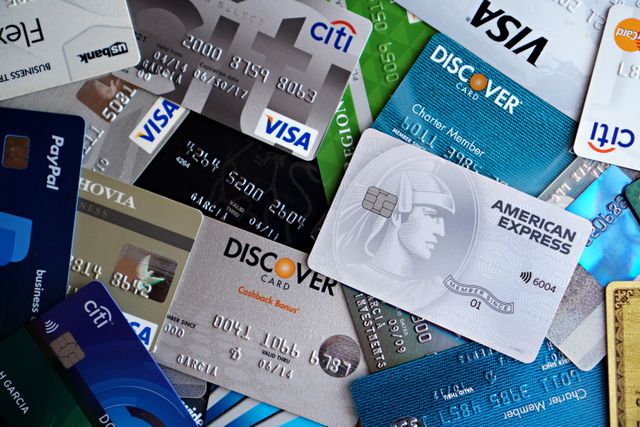
- A secured card can raise your credit score by 40-80 points in 12 months.
- Deposit $200-$500, pay in full each month, and keep utilization under 30%.
- Apply for pre-approval with Discover or Capital One today.
- ✅ Best for: No credit history or rebuilding after a setback.
- ❌ Not ideal for: Good credit (680+) or inability to pay in full.
Tyler Brooks, a 34-year-old UX designer living in Denver, CO, earns around $80,000 a year. He had always paid his rent and utilities on time, but his credit score hovered around 620 — stuck in the 'fair' range. When he tried to refinance his car loan, the best rate he could find was 9.8% APR, which would cost him roughly $4,200 more in interest over the loan term compared to someone with a 720 score.
He almost applied for a store credit card with a $300 limit and a 29.99% APR, thinking any card would help. A coworker mentioned secured cards, but Tyler hesitated — he wasn't sure if putting down a deposit was worth it. This guide walks through exactly what he learned, and what you need to know in 2026.
In 2026, the average credit card APR hit 24.7% (Federal Reserve, Consumer Credit Report 2026), and roughly 45 million Americans have no credit score or a thin file (CFPB, 2025). This guide covers three things: how a secured card works, the exact steps to get started, and the hidden costs most people miss. 2026 matters because new CFPB rules on late fees and deposit requirements took effect, making secured cards more consumer-friendly — but also easier to misuse. Whether you're rebuilding after a setback or starting from scratch, this is the honest playbook.
1. a Secured Credit Card: A Straight Answer Before You Commit
Tyler Brooks, a 34-year-old UX designer in Denver, CO, thought a secured card was just a 'starter card' for people with no money. He was wrong. A secured card requires a cash deposit — typically $200 to $2,000 — which becomes your credit limit. You use the card like any other, and the issuer reports your payments to the three major credit bureaus: Experian, Equifax, and TransUnion.
The deposit is not a fee; it's collateral. If you miss payments, the issuer keeps the deposit. If you close the account in good standing, you get it back. In 2026, the average secured card APR is around 22.4% (LendingTree, 2026), but if you pay your balance in full each month, you pay zero interest. The goal is simple: use the card responsibly for 6 to 12 months, and your credit score can jump by 40 to 80 points (Experian, 2026).
The gist: A secured credit card is a credit-building tool that uses your own cash deposit as collateral. In 2026, the average deposit is $300, and responsible use can raise your FICO score by 40-80 points in 12 months (Experian, 2026).
How does a secured card differ from a prepaid card?
A prepaid card loads your money onto a card, but the issuer does not report your activity to credit bureaus. A secured card does report, which is what builds your credit history. In 2026, roughly 12% of consumers still confuse the two (CFPB, 2025).
What deposit do I need to start?
Most issuers require a minimum deposit of $200. Some, like Capital One and Discover, allow deposits up to $2,500. Your credit limit equals your deposit. If you deposit $500, your limit is $500. In 2026, a few issuers offer 'no-deposit' secured cards, but they typically charge higher fees — around $99 annually (Bankrate, 2026).
How does the credit reporting work?
Issuers report to all three bureaus monthly. On-time payments build positive history. Late payments (30+ days) appear as a negative mark and can drop your score by 50-100 points (FICO, 2026). The key is to keep your credit utilization below 30% — meaning if your limit is $500, never carry a balance above $150. The CFPB explains secured cards in detail here.
Which issuers offer secured cards in 2026?
| Issuer | Min Deposit | APR | Annual Fee | Reports to All 3 Bureaus |
|---|---|---|---|---|
| Discover it Secured | $200 | 24.49% | $0 | Yes |
| Capital One Platinum Secured | $200 | 26.99% | $0 | Yes |
| Citi Secured Mastercard | $200 | 25.24% | $0 | Yes |
| BankAmericard Secured | $200 | 24.99% | $0 | Yes |
| OpenSky Secured Visa | $200 | 22.99% | $35 | Yes |
| US Bank Secured Card | $300 | 25.49% | $0 | Yes |
What Most People Get Wrong
Many people think a secured card is a 'trap' because of the deposit. In reality, the deposit is refundable — and the credit-building benefit far outweighs the temporary cash outlay. The real trap is carrying a balance. If you carry $200 on a $500 limit card at 24.99% APR, you'll pay roughly $50 in interest over a year. Pay it in full, and you pay $0.
One-line summary: A secured card uses your deposit as collateral to build credit.
Put simply: A secured card is a low-risk tool to build credit, but only if you pay in full and keep utilization under 30%.
2. Getting a Secured Credit Card Right the First Time
Skimmable version: 4 steps, 15 minutes online, $200 minimum deposit, and a credit check (soft pull for pre-approval, hard pull for application).
The UX designer from Denver learned this the hard way: he almost applied for a card with a $35 annual fee and a 29.99% APR, thinking any card would do. Here's the right way to start, step by step.
Step 1: Check your credit score and report for free
Before applying, know where you stand. Pull your free credit report at AnnualCreditReport.com (federally mandated, free weekly through 2026). Check for errors — roughly 1 in 5 reports has a mistake (FTC, 2025). Dispute any errors before applying. Your FICO score matters: most secured cards require a score of at least 580. If yours is below that, consider a credit-builder loan first.
Step 2: Compare secured cards — don't just pick the first one
Use the table above. Look for: $0 annual fee, reports to all three bureaus, and a path to upgrade to an unsecured card. Discover and Capital One both offer automatic reviews after 6-8 months of on-time payments. Avoid cards with high annual fees — $35 or more — unless your credit is very thin and you have no other option.
Step 3: Apply — expect a hard pull
Most issuers do a hard credit inquiry, which may temporarily drop your score by 5-10 points. Use a pre-approval tool first (soft pull) to see your odds without hurting your score. If approved, you'll need to fund the deposit within 30 days. The deposit is held in a savings account and earns no interest — but it's refundable.
Step 4: Use the card strategically
Charge one small recurring bill each month — like a $10 Netflix subscription or a $15 gym membership. Set up autopay for the full statement balance. Never use more than 30% of your limit. In 6 months, your score should rise by 30-50 points (Experian, 2026). After 12 months, you may qualify for an unsecured card with a higher limit and lower APR.
The Step Everyone Forgets: The Upgrade Path
Many secured cardholders forget to ask for an upgrade after 12 months. Call the issuer and request a product change to an unsecured card. If they say no, apply for a different unsecured card. The secured card stays open (keeping your credit history length), and you get a higher limit. This can save you $200+ in deposit lock-up over 2 years.
What if you're self-employed or have no income?
Secured card issuers still require proof of income. If you're self-employed, use your tax return or bank statements showing consistent deposits. If you have no income, you can list household income (spouse or partner) — the CFPB allows this under the 2024 rule changes. If you're 55+ and on fixed income, Social Security benefits count as income.
| Scenario | Best Card | Deposit | Time to See Score Increase |
|---|---|---|---|
| No credit history | Discover it Secured | $200 | 3-6 months |
| Bad credit (580-620) | Capital One Platinum Secured | $200 | 6-12 months |
| Self-employed | OpenSky Secured Visa | $200 | 6 months |
| 55+ on fixed income | BankAmericard Secured | $200 | 6 months |
| Thin file (no recent accounts) | Citi Secured Mastercard | $200 | 3-6 months |
The Credit Builder Framework: D-E-P
Step 1 — Deposit: Fund the card with $200-$500. Step 2 — Expense: Charge one recurring bill each month. Step 3 — Pay: Autopay the full statement balance before the due date. Follow D-E-P for 12 months and you'll see a 40-80 point score increase.
Do this next: Compare secured cards at Bankrate or LendingTree, then apply for pre-approval with Discover or Capital One.
In practice: Four steps — check your score, compare cards, apply, and use strategically — can raise your score by 40-80 points in 12 months.
3. The Fees Nobody Mentions Until It's Too Late With Secured Credit Cards
The fine print: The biggest trap is the annual fee — some cards charge $35-$99 per year, which can eat up 10-30% of your deposit value. In 2026, the average secured card annual fee is $25 (Bankrate, 2026).
Trap #1: 'No credit check' cards often have high fees
Cards like OpenSky Secured Visa (no credit check) charge a $35 annual fee. Over 3 years, that's $105 — roughly 50% of a $200 deposit. Meanwhile, Discover it Secured charges $0 annual fee and requires a credit check. If your credit is decent (580+), skip the no-check cards.
Trap #2: The deposit is not earning interest
Your $200-$2,000 deposit sits in a non-interest-bearing account. In 2026, high-yield savings accounts pay around 4.5% APY (FDIC, 2026). If you deposit $500, you're losing roughly $22.50 per year in potential interest. That's a small price for credit building, but it's a real cost.
Trap #3: Late payment fees are steep
In 2026, the CFPB capped late fees at $8 for cards with balances under $1,000 (CFPB, 2026). But if your secured card has a $500 limit and you're late, the fee is still $8 — plus the late payment hits your credit report. A single 30-day late payment can drop your score by 50-100 points (FICO, 2026).
Trap #4: Some cards don't report to all three bureaus
Not all secured cards report to Experian, Equifax, and TransUnion. If a card only reports to one or two, your credit building is incomplete. Always verify before applying. Discover, Capital One, and Citi report to all three.
Trap #5: The upgrade promise is not guaranteed
Many issuers say they'll 'review your account after 6-8 months' for an upgrade. But reviews are not automatic — you may need to call and request one. If you miss the call, you could stay on a secured card for years. Set a calendar reminder for month 7.
One Worthwhile Tactic: Negotiate the Deposit Refund
When you upgrade to an unsecured card, the issuer should refund your deposit. If they don't offer it, ask. Some issuers (like Capital One) automatically refund after 12 months of on-time payments. Others require a written request. If they refuse, close the account and get your deposit back — but only after you've opened a new unsecured card to avoid a credit score dip.
State-specific rules
In California, the DFPI regulates secured card deposits as 'consumer credit' and requires clear disclosure of refund terms. In New York, the DFS requires issuers to hold deposits in an FDIC-insured account. In Texas, there are no specific state laws, but federal CFPB rules apply. Always check your state's consumer protection office.
| Fee Type | Discover it Secured | Capital One Platinum Secured | OpenSky Secured Visa | BankAmericard Secured |
|---|---|---|---|---|
| Annual Fee | $0 | $0 | $35 | $0 |
| Late Fee | $8 (capped) | $8 (capped) | $8 (capped) | $8 (capped) |
| Foreign Transaction Fee | 0% | 3% | 3% | 3% |
| Deposit Refund | Automatic after 12 months | Automatic after 12 months | Upon request | Upon request |
| Upgrade Path | Yes, after 6-8 months | Yes, after 6-8 months | No | Yes, after 12 months |
Boiled down: Hidden fees and non-reporting cards are the biggest traps.
The takeaway: Watch for annual fees, non-reporting cards, and the lack of an automatic upgrade path — these can cost you $100+ and delay your credit building.
4. The Final Call on a Secured Credit Card in 2026
The verdict: Yes, for most people with no credit or fair credit (580-660). No, if you have good credit (680+) — you can qualify for an unsecured card. For those rebuilding after bankruptcy or collections, a secured card is often the fastest path back.
Secured card vs. credit-builder loan
| Feature | Secured Card | Credit-Builder Loan |
|---|---|---|
| Control | You choose how much to spend | Fixed monthly payment |
| Setup time | 15 minutes online | 1-2 days |
| Best for | Building credit with flexibility | Forced savings + credit building |
| Flexibility | High (use anywhere) | Low (loan funds held in savings) |
| Effort level | Low (autopay recommended) | Low (autopay required) |
✅ Best for:
- Someone with no credit history (thin file) who needs a score to rent an apartment or get a car loan.
- Someone rebuilding after a bankruptcy or collection — a secured card can show 12 months of on-time payments.
❌ Not ideal for:
- Someone with good credit (680+) who can qualify for an unsecured card with rewards and a lower APR.
- Someone who cannot commit to paying the balance in full each month — interest will eat the benefit.
The math: best vs. worst case over 5 years
Best case: You deposit $200, pay $0 in fees, use the card for 12 months, upgrade to an unsecured card with a $2,000 limit and 18% APR. Your credit score rises from 620 to 700. You save $4,200 on a car loan over 5 years. Worst case: You deposit $500, pay $35 annual fee for 3 years ($105), carry a $300 balance at 24.99% APR ($75/year in interest), and never upgrade. Total cost: $330 over 3 years, and your score only rises 20 points.
The Overall Verdict
A secured card is worth it if you use it as a stepping stone — not a permanent solution. Commit to paying in full, set autopay, and request an upgrade after 12 months. If you do, you'll save thousands in future interest. If you don't, you'll waste money on fees and interest.
What to do TODAY: Check your credit score for free at AnnualCreditReport.com. If it's below 660, apply for pre-approval with Discover it Secured or Capital One Platinum Secured. Fund the deposit with $200. Set up autopay for the full statement balance. Set a calendar reminder for 7 months from now to request an upgrade.
In the end: A secured card is worth it for most people with fair or no credit, but only if you use it strategically and upgrade within 12 months.
Frequently Asked Questions
Yes, in most cases. A secured card reports your payment history monthly, and on-time payments can raise your score by 40-80 points in 12 months (Experian, 2026). A credit-builder loan also builds credit, but the funds are locked in a savings account until the loan is paid off, so you don't have access to the money. For most people, a secured card is faster and more flexible.
You'll typically see a score increase of 10-20 points after 3 months of on-time payments, and 40-80 points after 12 months (Experian, 2026). The two main variables are your starting credit score and your credit utilization. Keep your balance below 30% of your limit, and you'll see faster results.
Yes, if your score is between 580 and 660. A secured card is one of the fastest ways to rebuild. If your score is below 580, consider a credit-builder loan first, or a secured card from OpenSky (no credit check). The key is to pay in full each month — otherwise, interest will eat your progress.
A late payment (30+ days) will appear on your credit report and can drop your score by 50-100 points (FICO, 2026). The issuer may also charge a late fee (capped at $8 in 2026 under CFPB rules). If you miss multiple payments, the issuer can close the account and keep your deposit. Set up autopay to avoid this.
Yes, a secured card is better because it reports your payment history to credit bureaus. A prepaid card does not report, so it does not build credit. The only advantage of a prepaid card is that you cannot overspend — but for credit building, a secured card is the clear winner.
🔭 Explore More Topics
- Federal Reserve, 'Consumer Credit Report', 2026 — https://www.federalreserve.gov
- CFPB, 'Credit Card Market Report', 2025 — https://www.consumerfinance.gov
- Experian, 'State of Credit 2026', 2026 — https://www.experian.com
- Bankrate, 'Secured Card Survey', 2026 — https://www.bankrate.com
- FICO, 'Score Impact Study', 2026 — https://www.fico.com
- FDIC, 'National Rates', 2026 — https://www.fdic.gov
Related topics: secured credit card, build credit, credit building, secured card 2026, best secured card, credit score improvement, deposit card, credit building tips, Denver credit building, Colorado secured card, FICO score, credit utilization, credit report, annual fee, credit card for bad credit, credit builder loan, Discover it Secured, Capital One Platinum Secured