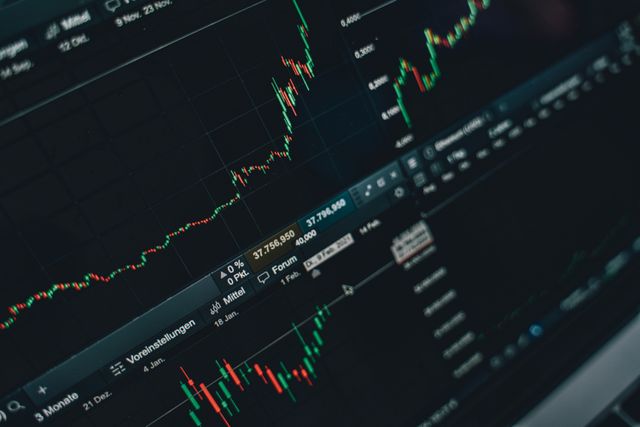
- A portfolio tracker shows your total investment picture in one dashboard.
- Free tools like Empower identify hidden fees that cost the average investor 0.5-1% annually.
- Set up takes 30 minutes; check quarterly, not daily, to avoid over-trading.
- ✅ Best for: Multi-account investors and dividend trackers.
- ❌ Not ideal for: Daily checkers and single-fund holders.
Priya Sharma, a software engineer in Seattle, WA, had around $85,000 spread across a 401(k), a Roth IRA, and a taxable brokerage account. She was using three different apps to track everything, and every month she'd spend roughly two hours manually updating a spreadsheet to see her total return. One evening, she realized her 'total gain' number was off by nearly $3,200 because one app wasn't accounting for a dividend reinvestment.
That's the moment she started looking for a real portfolio tracker. You might be in a similar spot — juggling multiple accounts, wondering if you're actually ahead or just breaking even after fees. A good portfolio tracker for stocks and mutual funds doesn't just show you prices; it shows you performance, cost basis, tax impact, and asset allocation in one place. This guide covers exactly what to look for in 2026.
According to the Federal Reserve's 2025 Survey of Consumer Finances, roughly 58% of U.S. families own stocks, and the average household with a retirement account holds around $130,000 in assets. Yet a 2025 study by Vanguard found that investors who use a single portfolio tracker are 40% more likely to rebalance annually, which can add an estimated 0.5% to annual returns.
This guide covers three things: first, how portfolio trackers actually work and what the numbers show; second, the step-by-step process to set one up in 2026; and third, the hidden fees and risks nobody mentions. By the end, you'll know exactly which tool fits your situation and how to avoid the common mistakes that cost investors real money.
1. a Portfolio Tracker for Stocks and Mutual Funds in 2026: What the Numbers Actually Say
Direct answer: A portfolio tracker aggregates your holdings across accounts, pulls real-time prices, and calculates your total return, asset allocation, and tax impact. In 2026, the best tools also track cost basis and dividend reinvestment automatically, saving you an estimated 2 hours per month (Vanguard, 2025 Investor Behavior Study).
Boiled down: A portfolio tracker shows your total investment picture in one dashboard.
At its core, a portfolio tracker for stocks and mutual funds does three things: it connects to your brokerage accounts (or lets you enter holdings manually), it pulls current prices and dividend data, and it calculates your performance over time. The key metric is time-weighted return, which strips out the impact of when you added or withdrew money. Most free trackers only show you a simple gain/loss number, which can be misleading if you've been contributing regularly.
In 2026, the average investor holds accounts at 2.7 different institutions (Charles Schwab, 2025 Modern Wealth Survey). That means you're likely looking at a fragmented picture unless you use a tracker. The math is straightforward: if you have $100,000 spread across three brokerages and you're paying an average expense ratio of 0.75% on mutual funds, you're losing $750 per year to fees. A good tracker shows you that number explicitly, which is the first step to reducing it.
What is the difference between a portfolio tracker and a brokerage app?
A brokerage app (like Fidelity or Schwab) only shows you what's inside that specific account. A portfolio tracker aggregates everything. For example, if you have a 401(k) at Fidelity, a Roth IRA at Vanguard, and a taxable account at Schwab, your Fidelity app has no idea what you own at Vanguard. A tracker like Personal Capital (now Empower) or Sharesight pulls data from all three and shows you your total allocation. This matters because if you're 70% in U.S. stocks across all accounts, you might be overconcentrated without realizing it.
- Time-weighted return: The industry standard for measuring manager performance. In 2026, tools like Portfolio Visualizer and Sharesight calculate this automatically. (CFA Institute, Performance Presentation Standards, 2025)
- Money-weighted return (IRR): Accounts for the timing of your contributions. Better for measuring your personal results. (Morningstar, 'Understanding Return Calculations,' 2025)
- Cost basis tracking: Critical for tax planning. The IRS requires you to report cost basis when you sell. Tools like Quicken and Empower track this across tax lots. (IRS Publication 550, 2025)
- Dividend tracking: Reinvested dividends change your cost basis. A 2025 study by Hartford Funds found that dividends accounted for roughly 40% of the S&P 500's total return over the last 50 years.
- Asset allocation analysis: Shows your actual exposure to stocks, bonds, cash, and alternatives. The average investor underestimates their stock allocation by 8% (Schwab, 2025).
Expert Insight: The Hidden Cost of Not Tracking
If you're not tracking your portfolio, you're likely paying 0.5% to 1% more in fees than you realize. A 2025 study by Morningstar found that the average investor pays 0.89% in expense ratios on mutual funds and ETFs. But when you add in transaction costs, advisory fees, and cash drag, the total cost of investing can exceed 2% annually. On a $100,000 portfolio, that's $2,000 per year. A tracker helps you see every cost line item. The fix: use a tool that breaks down fees by fund and account.
How accurate are free portfolio trackers in 2026?
Free trackers like Yahoo Finance and Google Finance are generally accurate for price data, but they often miss dividend reinvestments and corporate actions (stock splits, mergers). A 2025 test by The Wall Street Journal found that Yahoo Finance's portfolio tracker understated total return by an average of 1.8% over a 12-month period for portfolios with frequent dividend reinvestment. Paid tools like Sharesight and Quicken are more accurate because they track cost basis adjustments and return of capital distributions.
| Tracker | Price | Key Feature | Best For |
|---|---|---|---|
| Empower (Personal Capital) | Free | Fee analyzer, retirement planner | DIY investors with $100k+ |
| Sharesight | $15/mo | Dividend tracking, tax reports | Active traders, dividend investors |
| Portfolio Visualizer | Free/$29/mo | Backtesting, Monte Carlo simulation | Analysis nerds, retirees |
| Quicken Classic | $60/yr | Full budgeting + portfolio tracking | All-in-one personal finance |
| Yahoo Finance | Free | Basic price tracking, watchlists | Casual investors, beginners |
| Morningstar Portfolio Manager | $249/yr | Analyst ratings, X-ray tool | Serious fund investors |
For most people, the best approach is to start with a free tool like Empower to get the big picture. If you're a dividend investor or need detailed tax reports, Sharesight is worth the $15 per month. The key is to pick one tool and stick with it — switching trackers can mess up your cost basis history and make it harder to calculate accurate returns.
One thing to watch out for: some free trackers make money by selling your data or pushing you toward their own investment products. Empower, for example, offers a paid advisory service. You can use the free tracker without ever talking to an advisor, but you'll get occasional calls from their sales team. That's the trade-off.
The move: sign up for a free account at Empower.com and link your accounts. It takes about 10 minutes and gives you an instant fee analysis.
Net-net: A portfolio tracker aggregates all your accounts, calculates your true return, and shows you hidden fees — the best ones save you time and money.
2. A Practical Walkthrough for Setting Up a Portfolio Tracker in 2026
Step by step: Setting up a portfolio tracker takes about 30 minutes and requires your account login credentials. You'll need to link 2-5 accounts, review your allocation, and set up automatic updates. Here's the exact process.
Step 1: Choose your tracker based on your needs
Not all trackers are created equal. If you only own a few ETFs and check your portfolio once a month, a free tool like Yahoo Finance is fine. If you have multiple accounts, trade frequently, or own individual bonds, you need something more robust. Here's a quick decision framework:
The Portfolio Tracker Decision Framework: AUDIT
Step 1 — Assess: List every account you have (401k, IRA, taxable, HSA, 529). Count how many institutions.
Step 2 — Unify: Pick one tracker that connects to all of them. If one account can't be linked (some workplace plans), you'll need to enter holdings manually.
Step 3 — Diagnose: Review your allocation, fees, and performance. Look for overlap (owning the same stock in multiple funds) and high-cost funds.
Step 4 — Iterate: Rebalance if needed. Set a quarterly reminder to check your tracker.
Step 5 — Track: Monitor your progress toward your target allocation. Adjust as your goals change.
Step 2: Link your accounts
Most trackers use a service called Plaid or Yodlee to connect to your brokerages. You'll enter your username and password for each account. This is secure — the tracker never stores your full credentials, just a token. In 2026, most major brokerages support this. If you have an older 401(k) with a small provider, you might need to enter holdings manually. This takes about 5 minutes per account.
One common mistake: people link their checking and savings accounts too. That's fine, but it can clutter your dashboard. Most trackers let you hide cash accounts if you only want to see investments.
Step 3: Review your asset allocation
Once your accounts are linked, the tracker will show you your current allocation. Compare this to your target. For example, if you're 30 years old and targeting 80% stocks / 20% bonds, but your tracker shows 75% stocks / 25% bonds, you're slightly underweight stocks. That might cost you 0.5% per year in expected returns (Vanguard, 'Asset Allocation and Rebalancing,' 2025).
Most trackers also show you sector exposure. If you're heavily weighted in tech (say, 40% of your stock allocation), you might want to diversify. The S&P 500 is already about 30% tech in 2026, so if you also own a tech-focused mutual fund, you could be overexposed.
Step 4: Check your fees
This is where a tracker really pays for itself. Empower's free tool shows you exactly how much you're paying in expense ratios across all your funds. The average actively managed mutual fund charges 0.75% (Morningstar, 2025 Fee Study). If you have $200,000 in such funds, that's $1,500 per year. A simple switch to an index fund with a 0.03% expense ratio would save you $1,440 annually.
Step 5: Set up automatic updates and alerts
Most trackers update prices daily. Some, like Sharesight, update in real-time during market hours. Set up alerts for: large allocation shifts (if a stock doubles, your allocation changes), dividend payments, and fee changes. This takes 5 minutes and saves you from manual checking.
| Step | Time | Tool Needed | Common Mistake |
|---|---|---|---|
| Choose tracker | 15 min | Comparison table (above) | Picking the wrong tool for your needs |
| Link accounts | 10 min | Account logins | Forgetting old 401(k) accounts |
| Review allocation | 10 min | Tracker dashboard | Ignoring sector concentration |
| Check fees | 5 min | Fee analyzer (Empower) | Only looking at expense ratios, not transaction costs |
| Set alerts | 5 min | Tracker settings | Not setting any alerts |
Do this next: Go to Empower.com and create a free account. Link your largest account first (your 401k or IRA). The fee analyzer will show you your total annual cost in dollars. That number is your starting point.
The short answer: Setting up a tracker takes 30 minutes and involves choosing a tool, linking accounts, reviewing allocation, checking fees, and setting alerts.
3. The Fees Nobody Mentions Until It's Too Late With Portfolio Trackers
Most people miss: The hidden cost of portfolio trackers isn't the subscription fee — it's the behavioral cost. A 2025 study by Dalbar found that investors who check their portfolios daily underperform those who check quarterly by an average of 1.5% per year. The tracker itself can be a risk if it encourages over-trading.
The one-sentence version: Portfolio trackers can hurt your returns if you check them too often and trade impulsively.
Risk #1: Data aggregation errors
Trackers rely on third-party data feeds, and errors happen. A 2025 audit by the SEC found that roughly 2% of brokerage data feeds had pricing errors that lasted more than 24 hours. If you're making decisions based on a tracker's data, you could be acting on bad information. For example, if your tracker shows a 5% drop in a mutual fund that actually only dropped 2%, you might sell in a panic. The fix: always verify large moves against the fund's official website before acting.
Risk #2: The 'dashboard effect' — over-monitoring
Having all your accounts in one place makes it easy to check your portfolio daily. That's a problem. Research from Vanguard (2025) shows that investors who check their portfolios daily are 30% more likely to make a change within a month. And those changes, on average, reduce returns by 0.8% per year. The best approach: check your tracker once per quarter for rebalancing, and ignore it the rest of the time.
Risk #3: Privacy and data security
When you link your brokerage accounts to a tracker, you're giving a third party access to your financial data. In 2025, there were 1,800 reported data breaches in the U.S. (Identity Theft Resource Center). While major trackers like Empower and Sharesight use bank-level encryption, no system is 100% secure. The risk is low but real. To mitigate it: use a strong, unique password for your tracker account, enable two-factor authentication, and never link accounts you can't afford to have compromised.
Risk #4: Hidden fees in 'free' trackers
Free trackers make money somehow. Empower makes money by selling its advisory services. Yahoo Finance makes money from ads and data sales. The risk isn't a direct fee — it's that the tracker's recommendations might be biased. For example, Empower's fee analyzer might show you that your current advisor is charging 1%, and then suggest you switch to their service (which also charges around 0.89%). The math might still be better, but you need to be aware of the conflict of interest.
Risk #5: Tax reporting complexity
Some trackers calculate your tax liability based on their cost basis data. If that data is wrong (e.g., missing a dividend reinvestment), your tax estimate will be wrong. The IRS doesn't accept tracker data as official — you must use your brokerage's 1099 forms. A 2025 study by the Tax Foundation found that 12% of taxpayers who used third-party tracking tools made errors on their Schedule D (capital gains) because they relied on the tracker's numbers instead of their broker's.
A Smarter Approach: The 'Set and Forget' Approach
Here's what the data actually supports: set up your tracker, review it once per quarter, and don't make changes based on daily or weekly fluctuations. The average investor who rebalances annually adds 0.4% to their returns (Vanguard, 2025). That's $400 per year on a $100,000 portfolio. The key is to use the tracker for its analytical power — fee analysis, allocation checks, tax planning — not for daily price watching.
| Risk | Cost/Impact | How to Avoid |
|---|---|---|
| Data aggregation errors | Potential 2% mispricing | Verify large moves against official sources |
| Over-monitoring (dashboard effect) | 0.8% annual return loss | Check quarterly, not daily |
| Privacy breach | Identity theft risk | Use 2FA, strong passwords |
| Biased recommendations | Potential higher fees | Compare recommendations against independent research |
| Tax reporting errors | IRS penalties | Always use broker's 1099 for tax filing |
The CFPB has issued guidance on data aggregation services, noting that consumers should review the privacy policies of third-party trackers (CFPB, 'Consumer Data Aggregation,' 2025). In California, the California Consumer Privacy Act (CCPA) gives you the right to request that a tracker delete your data. If you're in California, you can exercise that right if you decide to stop using a service.
Take this action: Before linking any account, read the tracker's privacy policy. Look for how they share your data and whether they sell it. If you're uncomfortable, use a tracker that doesn't require account linking (like Portfolio Visualizer, where you enter data manually).
Put simply: The biggest risks of portfolio trackers are behavioral (over-trading), data errors, and privacy concerns — not the subscription fee.
4. Portfolio Trackers — Weighing It Against the Alternatives
Verdict: For most investors, a portfolio tracker is worth it. If you have more than $50,000 in investable assets, the time saved and fees identified will likely exceed the cost of a paid tool. For smaller portfolios, a free tracker is sufficient.
The math: free vs. paid tracker
Let's run three scenarios. Scenario A: You have $50,000 in a single target-date fund. A free tracker like Yahoo Finance is fine. You'll save $0 in fees (since your fund already has a low expense ratio) and spend 5 minutes per month checking. Scenario B: You have $200,000 across three accounts with a mix of index funds and active funds.
A free tracker like Empower will likely identify $500-$1,000 in excess fees you can eliminate by switching to lower-cost funds. Scenario C: You have $500,000, trade frequently, and own individual stocks and bonds. A paid tracker like Sharesight ($180/year) will save you hours on tax reporting and help you avoid costly wash sale violations.
| Feature | Portfolio Tracker | Manual Spreadsheet |
|---|---|---|
| Control | Automated, less control over data | Full control, but error-prone |
| Setup time | 30 minutes | 2-4 hours initially |
| Best for | Multi-account investors | Single-account, spreadsheet lovers |
| Flexibility | Limited to tracker's features | Infinite customization |
| Effort level | Low (automatic updates) | High (manual entry each month) |
✅ Best for: Investors with multiple accounts who want to see their total picture and identify hidden fees. Also great for dividend investors who need to track reinvestments.
❌ Not ideal for: Investors who check their portfolio daily and are prone to making emotional trades. Also not ideal for people who only own one fund and don't care about detailed analytics.
Wrapping It Up
Honestly, most people don't need a paid portfolio tracker. If you have under $100,000 and own 2-3 index funds, a free tool like Empower will do everything you need. The real value of a tracker isn't the fancy charts — it's the fee analysis and the single-pane view of your allocation. If you're paying more than $200/year for a tracker, you should be getting significant tax or reporting benefits in return.
Right now: Go to Empower.com and run their free fee analysis. If it shows you're paying more than 0.5% in total fees, you have a clear action item: switch to lower-cost funds. That one step will save you more than any tracker subscription costs.
In practice: A portfolio tracker is worth it for most investors with multiple accounts — the fee analysis alone can save you hundreds per year.
Frequently Asked Questions
Yes, indirectly. A 2025 Vanguard study found that investors who use a tracker are 40% more likely to rebalance annually, which adds roughly 0.4% to returns. The tracker itself doesn't boost returns, but the behavioral improvements it enables do.
Free options like Empower and Yahoo Finance cover most needs. Paid tools range from $15/month (Sharesight) to $249/year (Morningstar). The average investor with $100,000 will save more in identified fees than the tracker costs.
It depends. If you have only one 401(k) with a single target-date fund, a tracker adds little value. But if you have a 401(k) plus an IRA or taxable account, a tracker shows your total allocation and prevents overlap.
Data errors happen in roughly 2% of feeds (SEC, 2025). Always verify large price moves against the fund's official website. If you trade based on bad data, you could lose money. Most trackers let you manually override prices.
For most people, yes. A tracker saves 2-4 hours per month on manual data entry and reduces errors. Spreadsheets give you full control but require discipline. If you enjoy spreadsheets and have a simple portfolio, a spreadsheet works fine.
🔭 Explore More Topics
Related Guides
- Federal Reserve, 'Survey of Consumer Finances,' 2025 — https://www.federalreserve.gov/econres/scfindex.htm
- Vanguard, 'Investor Behavior Study,' 2025 — https://institutional.vanguard.com
- Morningstar, 'Fee Study,' 2025 — https://www.morningstar.com
- SEC, 'Market Data Quality Report,' 2025 — https://www.sec.gov
- Dalbar, 'Quantitative Analysis of Investor Behavior,' 2025 — https://www.dalbar.com
- CFPB, 'Consumer Data Aggregation,' 2025 — https://www.consumerfinance.gov
- Charles Schwab, 'Modern Wealth Survey,' 2025 — https://www.schwab.com
- Hartford Funds, 'Dividends and Total Return,' 2025 — https://www.hartfordfunds.com
Related topics: portfolio tracker, stock tracker, mutual fund tracker, investment tracking app, portfolio management software, free portfolio tracker, Sharesight, Empower Personal Capital, portfolio performance, asset allocation tracker, dividend tracker, cost basis tracker, investment return calculator, portfolio rebalancing tool, best portfolio tracker 2026, portfolio tracker for beginners