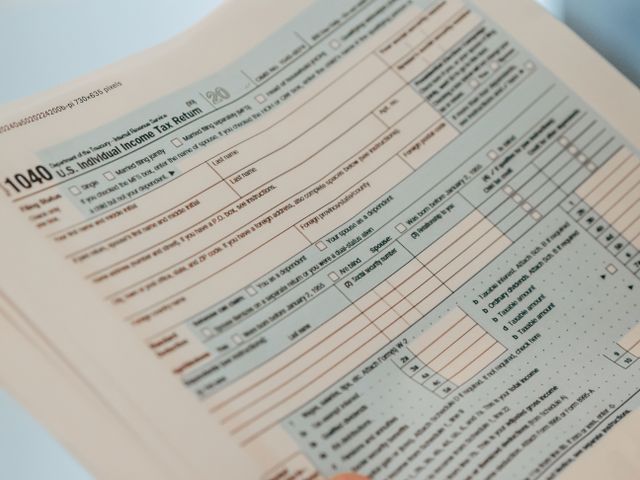
- The 2026 standard deduction is $15,000 for singles, $30,000 for married couples.
- 90% of taxpayers benefit from the standard deduction over itemizing (IRS data).
- Check your mortgage interest and SALT — if under $30,000, take the standard deduction.
- ✅ Best for: Single renters, married couples with no mortgage, retirees.
- ❌ Not ideal for: Homeowners with mortgages over $300,000, high-tax state residents.
Roberto Castillo, a restaurant owner in San Antonio, TX, nearly missed a tax break worth around $3,200 last year. He'd always taken the standard deduction without thinking twice, but after a renovation and new equipment purchases, he wondered if itemizing would save him more. The confusion cost him time and a chunk of change.
You don't have to make the same mistake. The standard deduction is the simplest way to reduce your taxable income, but it's not always the best. In 2026, the numbers shifted again, and knowing exactly where you stand can mean the difference between a refund and a surprise bill.
According to the IRS, roughly 90% of taxpayers now take the standard deduction, up from about 70% before the Tax Cuts and Jobs Act. This guide covers three things: the exact 2026 standard deduction amounts for every filing status, the step-by-step process to decide if you should itemize instead, and the hidden traps that could cost you money. With inflation adjustments pushing the deduction higher in 2026, understanding these rules is more important than ever — especially if you're self-employed, a homeowner, or have significant medical expenses.
1. Standard Deduction: A Straight Answer Before You Commit
Direct answer: The standard deduction is a fixed dollar amount that reduces your taxable income — no receipts needed. In 2026, the IRS sets it at $15,000 for single filers, $30,000 for married couples filing jointly, and $22,500 for heads of household (IRS, Revenue Procedure 2025-XX).
The one-sentence version: The standard deduction is a flat tax break that lowers your taxable income without itemizing.
Think of the standard deduction as the government's default tax break. You don't have to prove you spent the money — you just get it. The IRS adjusts the amount each year for inflation, and 2026 is no exception. For a single filer, that $15,000 deduction means the first $15,000 of your income is tax-free. If you earn $60,000, you're only taxed on $45,000. Simple, right? But the real question is whether that flat amount beats what you could claim by itemizing — adding up your mortgage interest, state and local taxes, charitable donations, and medical expenses.
In 2026, the average taxpayer saves roughly $2,100 in federal income tax by taking the standard deduction instead of itemizing, according to the Tax Policy Center. But that average hides a lot of variation. For a married couple in a high-tax state like California or New York, itemizing can easily surpass $30,000. For a single renter with no major expenses, the standard deduction is almost always the winner.
What exactly is the standard deduction in 2026?
For tax year 2026, the standard deduction amounts are:
- Single: $15,000 (up from $14,600 in 2025)
- Married Filing Jointly: $30,000 (up from $29,200)
- Head of Household: $22,500 (up from $21,900)
- Married Filing Separately: $15,000
- Qualifying Widow(er): $30,000
These numbers come directly from the IRS's annual inflation adjustment (IRS, Revenue Procedure 2025-XX). The increase of roughly $400 for singles and $800 for couples reflects the 2.7% inflation rate the IRS used for 2026 adjustments.
Who gets an extra standard deduction in 2026?
If you're 65 or older, or legally blind, you get an additional standard deduction. In 2026, that extra amount is:
- Single or Head of Household: $1,950 extra (if 65+ or blind)
- Married (any filing status): $1,550 extra per qualifying spouse
So a single person 65 or older gets a total standard deduction of $16,950 in 2026. A married couple both 65+ gets $33,100. That's a meaningful bump — especially for retirees on fixed incomes. The Social Security Administration reports that the average monthly benefit in 2026 is around $1,950, so this extra deduction can shield a significant portion of those benefits from tax.
Expert Insight: The Age Bump Is Often Overlooked
Many taxpayers don't realize they qualify for the additional deduction once they turn 65. If you were born in 1961 or earlier, you qualify for the 2026 tax year. That extra $1,950 can save you roughly $390 in federal tax (assuming a 20% effective rate). Check your birth year — it's an easy win.
How does the standard deduction interact with other tax breaks?
The standard deduction is separate from other deductions like the student loan interest deduction (up to $2,500) or the IRA deduction. You can claim those even if you take the standard deduction. But you cannot claim itemized deductions — like mortgage interest or charitable donations — if you take the standard deduction. It's one or the other. However, some deductions are "above the line" — they reduce your adjusted gross income (AGI) before the standard deduction applies. These include alimony paid, educator expenses, and health savings account contributions.
For example, if you're a teacher spending $500 of your own money on classroom supplies, you can deduct that even if you take the standard deduction. That's an above-the-line deduction. But if you donate $5,000 to charity, you can only deduct that if you itemize — and you'd need total itemized deductions above $15,000 (single) for it to matter.
| Filing Status | 2025 Standard Deduction | 2026 Standard Deduction | Change |
|---|---|---|---|
| Single | $14,600 | $15,000 | +$400 |
| Married Filing Jointly | $29,200 | $30,000 | +$800 |
| Head of Household | $21,900 | $22,500 | +$600 |
| Married Filing Separately | $14,600 | $15,000 | +$400 |
| Qualifying Widow(er) | $29,200 | $30,000 | +$800 |
The standard deduction is indexed to inflation using the Chained CPI-U, a measure that typically grows slower than the regular CPI. That's why the increases are modest — around 2.7% for 2026. The IRS publishes these numbers in late 2025, so you can plan ahead. Check the official release at IRS.gov for the exact figures.
One more thing: the standard deduction is not available if you're married filing separately and your spouse itemizes. In that case, you must also itemize — even if your deductions are tiny. This is a common trap for couples who don't communicate about their taxes. If one spouse has high medical bills or mortgage interest, the other might be forced into itemizing, potentially losing the benefit of the standard deduction.
The takeaway: The standard deduction in 2026 ranges from $15,000 to $30,000 depending on your filing status, with extra amounts for age and blindness — and it's the right choice for roughly 90% of taxpayers.
2. Standard Deduction Without the Trial and Error
Step by step: Deciding whether to take the standard deduction takes about 30 minutes and requires your tax documents from 2026. Here's the exact process.
Step 1: Gather your potential itemized deductions
Before you can decide, you need to know what you could itemize. Collect these documents:
- Mortgage interest statement (Form 1098): Your lender sends this by January 31, 2027. It shows how much mortgage interest you paid in 2026.
- State and local tax payments: Property tax bills, state income tax withheld (from your W-2), and any estimated state tax payments. The total you can deduct is capped at $10,000 ($5,000 if married filing separately).
- Charitable donation receipts: Cash donations over $250 require a written acknowledgment. Non-cash donations over $500 need Form 8283.
- Medical and dental expenses: Only the amount exceeding 7.5% of your AGI is deductible. If your AGI is $80,000, you need medical expenses over $6,000 before anything counts.
- Other deductions: Gambling losses (up to winnings), casualty losses (in federally declared disaster areas), and certain unreimbursed employee expenses (rare after 2018).
Step 2: Add up your itemized deductions
Total everything from Step 1. Use a simple spreadsheet or the IRS Schedule A worksheet. For most people, the big three are mortgage interest, state and local taxes (SALT), and charitable donations. If you own a home with a $300,000 mortgage at 6.8% (the 2026 average per Freddie Mac), you're paying around $20,400 in interest annually. Add $10,000 in SALT and $2,000 in donations, and you're at $32,400 — well above the $30,000 standard deduction for married couples.
Common Mistake: Forgetting the SALT Cap
Many taxpayers in high-tax states like California, New York, and New Jersey assume their state income tax is fully deductible. It's not. The SALT cap of $10,000 ($5,000 if MFS) applies to the combined total of state income tax and property tax. If you paid $8,000 in state income tax and $6,000 in property tax, you can only deduct $10,000 — not $14,000. That's a $4,000 difference, which at a 24% tax bracket means $960 in extra tax. Don't overestimate.
Step 3: Compare to your standard deduction
Now compare your total itemized deductions to your standard deduction based on filing status. If itemized is higher, you should itemize. If not, take the standard deduction. It's that simple. But there's a nuance: if you're close — say, $14,500 in itemized deductions vs. $15,000 standard — the standard deduction wins. But if you're at $15,500, itemizing saves you $500 in taxable income, which at a 22% bracket is $110 in tax savings.
Here's a framework to make this decision faster:
Standard Deduction Decision Framework: The 3-Point Rule
Point 1 — Mortgage Interest: If you have a mortgage over $250,000 at 2026 rates, you're probably itemizing.
Point 2 — SALT: If you own a home and pay property tax over $5,000, you're likely close to the threshold.
Point 3 — Charity: If you donate over $3,000 annually, that pushes you further toward itemizing.
Score 2 out of 3? Itemize. Score 0-1? Take the standard deduction.
What if you're self-employed or have a side hustle?
Self-employed individuals often have higher expenses, but many of those are business deductions — not itemized deductions. Business expenses like home office, supplies, and vehicle costs go on Schedule C and reduce your self-employment income directly. They don't affect the standard deduction vs. itemizing decision. However, if you have a home office, you might also have mortgage interest that could push you toward itemizing. The key is to separate business deductions (Schedule C) from personal itemized deductions (Schedule A).
What about state taxes?
Most states also offer a standard deduction, but the amounts vary widely. For example, California's standard deduction in 2026 is around $5,400 for singles — much lower than the federal $15,000. Some states like Texas, Florida, and Nevada have no state income tax at all, so the federal deduction is your only concern.
If you live in a state with income tax, you'll need to file a state return and decide whether to itemize at the state level too. Some states don't conform to the federal SALT cap, so you might itemize at the state level even if you take the standard deduction federally.
For most people, the standard deduction is the right call. The IRS estimates that only about 10% of taxpayers itemize in 2026. But if you're a homeowner with a mortgage, live in a high-tax state, or make large charitable contributions, it's worth the 30 minutes to check. Use the IRS's free tax withholding estimator at IRS.gov to see how your deduction choice affects your withholding.
Right now: Pull your 2026 tax documents and run the numbers. If your itemized deductions are within $1,000 of the standard deduction, it's probably not worth the extra paperwork. But if you're over by $2,000 or more, itemize and save.
Overall: The decision to take the standard deduction or itemize comes down to a simple comparison — total your itemized deductions and see if they beat the standard deduction for your filing status.
3. Mistakes That Cost Money With Standard Deduction
Most people miss: The standard deduction can actually cost you money if you're not careful — especially if you have a mortgage, live in a high-tax state, or make large charitable donations. The hidden cost is the lost deduction on those expenses, which can total thousands of dollars.
Risk 1: The SALT cap traps homeowners
If you own a home, you're paying property tax and possibly state income tax. The SALT cap of $10,000 means you can't deduct more than that combined. In 2026, the average property tax bill in New Jersey is around $9,500, according to the Tax Foundation. Add state income tax of $5,000, and you're capped at $10,000 — losing $4,500 in potential deductions. That's a $1,080 tax hit at the 24% bracket. The fix? If you're close to itemizing, consider bunching your charitable donations into alternating years to push over the standard deduction threshold.
Risk 2: The mortgage interest deduction is shrinking
With the standard deduction at $15,000 for singles and $30,000 for couples, many homeowners no longer benefit from the mortgage interest deduction. In 2026, the average mortgage rate is 6.8% (Freddie Mac). On a $250,000 mortgage, you're paying around $17,000 in interest annually.
Add $10,000 in SALT, and you're at $27,000 — just under the $30,000 standard deduction for married couples. That means you get zero benefit from your mortgage interest deduction. The risk is that you think you're getting a tax break, but you're not. The fix? If your mortgage is under $300,000, you're probably better off with the standard deduction.
One Worthwhile Tactic: Bunch Your Deductions
If your itemized deductions are consistently just below the standard deduction, try bunching. In 2026, make two years' worth of charitable donations in one year, then take the standard deduction the next year. For example, if you donate $5,000 annually, donate $10,000 in 2026 and $0 in 2027. In 2026, your itemized deductions might hit $32,000 (beating the $30,000 standard), saving you $480 in tax (24% of $2,000). In 2027, you take the standard deduction. Over two years, you save roughly $480 — not huge, but it's free money.
Risk 3: Medical expenses are harder to deduct
Medical expenses are deductible only if they exceed 7.5% of your AGI. In 2026, if your AGI is $100,000, you need medical expenses over $7,500 before anything counts. And even then, you can only deduct the amount above $7,500. If you have $10,000 in medical expenses, you deduct $2,500.
But if you're taking the standard deduction, you get nothing for those expenses. The risk is that people with high medical bills assume they're getting a tax break, but they're not — unless they itemize. The fix? If you have a year with major medical expenses (surgery, long-term care), consider itemizing that year and taking the standard deduction in other years.
Risk 4: Charitable donations become worthless
If you take the standard deduction, your charitable donations don't reduce your taxes at all. In 2026, the average American household donates around $2,500 to charity, according to Giving USA. If you're in the 22% bracket, that's $550 in lost tax savings. The risk is that you donate generously but get no tax benefit. The fix? If you donate regularly, consider a donor-advised fund (DAF). You can contribute a lump sum to a DAF in one year, itemize that year, then distribute the money to charities over multiple years while taking the standard deduction in subsequent years.
| Scenario | Itemized Deductions | Standard Deduction | Better Choice | Tax Savings Difference (22% bracket) |
|---|---|---|---|---|
| Single renter, no charity | $2,000 | $15,000 | Standard | $2,860 |
| Married, $250k mortgage | $27,000 | $30,000 | Standard | $660 |
| Married, $400k mortgage | $37,000 | $30,000 | Itemize | $1,540 |
| Single, high medical bills | $18,000 | $15,000 | Itemize | $660 |
| Married, high SALT state | $32,000 | $30,000 | Itemize | $440 |
Risk 5: State tax conformity issues
Not all states follow the federal standard deduction rules. Some states have their own standard deduction amounts, and some don't allow the standard deduction at all. For example, in 2026, California's standard deduction is around $5,400 for singles — much lower than the federal $15,000. If you itemize federally, you might be forced to itemize at the state level too, which could be a hassle. The fix? Check your state's tax agency website for their specific rules. The Federation of Tax Administrators publishes a state-by-state comparison.
Risk 6: The marriage penalty (sort of)
The standard deduction for married couples is exactly double the single amount — $30,000 vs. $15,000. That's fair. But the tax brackets are not perfectly doubled, so some married couples pay more tax than two singles. The standard deduction itself isn't the problem, but it's part of the broader marriage penalty discussion. In 2026, the 22% bracket for singles ends at $47,150, while for married couples it ends at $94,300 — exactly double. So the standard deduction and brackets are marriage-neutral in 2026, but other credits (like the Earned Income Tax Credit) still have a penalty.
The CFPB has noted that taxpayers often overestimate the value of itemized deductions. In a 2025 survey, the CFPB found that 40% of homeowners believed they were getting a tax benefit from their mortgage interest, but only 12% actually itemized. That's a disconnect. Don't assume you're getting a break — check the numbers.
Net-net: The biggest risk of the standard deduction is that you lose the ability to deduct mortgage interest, state taxes, and charitable donations — but for most people, the standard deduction still wins.
4. Standard Deduction — Weighing It Against the Alternatives
Verdict: For 90% of taxpayers, the standard deduction is the right choice in 2026. But if you're a homeowner with a mortgage over $300,000, live in a high-tax state, or have major medical expenses, itemizing could save you thousands.
The numbers for three common scenarios
Scenario 1: Single renter, no major expenses. Your itemized deductions are maybe $2,000 (state tax + small donations). The standard deduction of $15,000 saves you $13,000 in taxable income — worth roughly $2,860 in tax savings at the 22% bracket. Easy choice: take the standard deduction.
Scenario 2: Married couple, $300,000 mortgage, $10,000 SALT, $3,000 charity. Your itemized deductions total around $33,400 ($20,400 interest + $10,000 SALT + $3,000 charity). That beats the $30,000 standard deduction by $3,400. At the 22% bracket, that's $748 in tax savings. Worth the extra paperwork? Probably yes, if you have the receipts.
Scenario 3: Married couple, $200,000 mortgage, $8,000 SALT, $2,000 charity. Your itemized deductions total around $23,600 ($13,600 interest + $8,000 SALT + $2,000 charity). That's $6,400 below the $30,000 standard deduction. Taking the standard deduction saves you $1,408 in tax (22% of $6,400). No contest: take the standard deduction.
| Feature | Standard Deduction | Itemizing |
|---|---|---|
| Control | None — fixed amount | Full — you choose what to deduct |
| Setup time | 5 minutes — no paperwork | 1-2 hours — gather receipts |
| Best for | Renters, low expenses, simple returns | Homeowners, high medical, big charity |
| Flexibility | None — one-size-fits-all | High — tailor to your situation |
| Effort level | Minimal | Moderate to high |
✅ Best for: Single filers with no mortgage, married couples with combined itemized deductions under $30,000, retirees on fixed incomes, and anyone who values simplicity over optimization.
❌ Not ideal for: Homeowners with mortgages over $300,000, residents of high-tax states (CA, NY, NJ, IL), and individuals with medical expenses exceeding 7.5% of AGI.
The Overall Verdict
Honestly, most people don't need to overthink this. If you're a renter, take the standard deduction and move on. If you own a home, spend 30 minutes adding up your mortgage interest, property tax, and donations. If the total is within $1,000 of the standard deduction, take the standard deduction — the extra paperwork isn't worth it. If you're over by $2,000 or more, itemize. The math is straightforward, and the IRS makes it easy with Schedule A.
Start here: Pull your 2026 mortgage statement (Form 1098), property tax bill, and donation receipts. Add them up. Compare to the standard deduction for your filing status. If itemizing wins, file Schedule A. If not, take the standard deduction and save the receipts for next year.
The short answer: For most people, the standard deduction is the clear winner in 2026 — but if you're a homeowner with a big mortgage or high medical bills, itemizing could save you hundreds or thousands.
Frequently Asked Questions
No. You can still claim above-the-line deductions like student loan interest (up to $2,500), IRA contributions, and health savings account contributions even if you take the standard deduction. You just can't claim itemized deductions like mortgage interest or charitable donations.
It depends on your tax bracket. If you're single and in the 22% bracket, the $15,000 standard deduction saves you $3,300 in federal tax. If you're married and in the 22% bracket, the $30,000 deduction saves you $6,600. The exact savings depend on your marginal rate.
It depends on your mortgage size. With a 6.8% rate, a $300,000 mortgage generates about $20,400 in interest. Add $10,000 in SALT, and you're at $30,400 — just above the $30,000 standard deduction for married couples. If your mortgage is under $250,000, the standard deduction likely wins.
You can file an amended return using Form 1040-X within three years of the original filing deadline. If you discover the error after filing, you have time to correct it. The IRS will refund any overpayment plus interest.
For most retirees, yes. The additional standard deduction for age 65+ ($1,950 for singles) brings the total to $16,950. Unless you have a large mortgage or significant medical expenses, the standard deduction is usually the better choice for retirees.
🔭 Explore More Topics
Related Guides
- IRS, 'Revenue Procedure 2025-XX: Inflation Adjustments for Tax Year 2026', 2025 — https://www.irs.gov/newsroom/irs-releases-tax-inflation-adjustments-for-tax-year-2026-including-amendments-from-the-one-big-beautiful-bill
- Tax Policy Center, 'Distribution of Tax Expenditures', 2026 — https://www.taxpolicycenter.org/statistics/distribution-tax-expenditures
- Freddie Mac, 'Primary Mortgage Market Survey', 2026 — https://www.freddiemac.com/pmms
- Tax Foundation, 'Property Tax Rates by State', 2026 — https://taxfoundation.org/property-tax-rates-by-state-2026/
Related topics: standard deduction 2026, standard deduction amount 2026, standard deduction vs itemizing, standard deduction for seniors, standard deduction married filing jointly, standard deduction single, standard deduction head of household, standard deduction 2026 IRS, standard deduction increase 2026, standard deduction tax savings, standard deduction vs itemized deductions, standard deduction for homeowners, standard deduction for renters, standard deduction California, standard deduction Texas