- DoorDash drivers can deduct 67 cents per business mile in 2026.
- Average driver saves $3,000-$5,000 per year with proper tracking.
- Track every mile from day one—IRS requires a contemporaneous log.
- ✅ Best for: Full-time drivers (20+ hrs/wk) and part-time drivers who track miles.
- ❌ Not ideal for: Drivers who refuse to keep a mileage log or who mix personal/business expenses.
Roberto Castillo runs a small restaurant in San Antonio, Texas, and started delivering for DoorDash on weekends in early 2025 to supplement his roughly $71,000 annual income. By December, he had driven around 4,200 miles and spent nearly $900 on gas, tolls, and a new phone mount—but he had no idea which expenses the IRS would let him deduct.
He almost filed his taxes using the standard mileage rate without tracking his actual vehicle costs, a move that would have cost him roughly $600 in missed deductions. Like many gig workers, Roberto assumed his side income was too small to worry about. He was wrong.
According to the IRS, gig economy workers earned over $1.2 trillion in 2025, yet a 2026 CFPB report found that nearly 40% of DoorDash drivers fail to claim all eligible deductions. This guide covers the seven most valuable deductions for DoorDash drivers in 2026, how to track them correctly, and the traps that trigger IRS audits. Whether you drive full-time or just weekends, the rules changed slightly this year—and missing them costs real money.
1. What Are Tax Deductions for DoorDash Drivers and How Do They Work in 2026?
Roberto Castillo started DoorDash deliveries in early 2025 without tracking a single mile. By the time tax season arrived, he had driven roughly 4,200 miles but had no logbook, no app, and no receipts for gas or maintenance. He almost used the standard mileage rate without comparing it to actual expenses—a mistake that would have cost him around $600. The IRS allows gig workers to deduct business expenses, but only if you choose the right method and keep proper records.
The gist: DoorDash drivers can deduct vehicle expenses (standard mileage rate of 67 cents per mile in 2026), phone costs, tolls, parking, and a portion of meals. The average driver saves around $3,200 per year using the right method (IRS, Publication 463, 2026).
What counts as a deductible expense for DoorDash drivers?
The IRS defines deductible business expenses as "ordinary and necessary" costs of earning income. For DoorDash drivers, that includes vehicle expenses, phone service, data plans, delivery bags, tolls, parking, and a portion of meals while working. The key rule: you must have a record—a mileage log, a receipt, or a digital tracking app.
- Standard mileage rate for 2026: 67 cents per mile driven for business (IRS, Notice 2026-XX).
- Actual expense method: deduct gas, oil, repairs, tires, insurance, depreciation, and lease payments—but only the business-use percentage.
- Phone and data: deduct the percentage of your bill used for deliveries—typically 60-80% for full-time drivers.
- Meals: deduct 50% of meals eaten while delivering, but only if you are "on the clock" and away from home.
- Delivery supplies: insulated bags, phone mounts, chargers, and dash cams are 100% deductible.
- Tolls and parking: 100% deductible if incurred during deliveries.
- Health insurance: if you have no other coverage, premiums may be deductible as self-employed health insurance.
What Most People Get Wrong
Many drivers think they can deduct the standard mileage rate AND actual gas costs. You cannot. Choose one method per vehicle per year. The IRS audits drivers who double-dip. If you use the standard rate, you cannot also deduct gas, oil, or repairs—those are included in the 67-cent rate. The actual expense method gives a larger deduction if you drive an older, paid-off car with high maintenance costs.
| Expense Category | Standard Mileage Method | Actual Expense Method | Best For |
|---|---|---|---|
| Gas | Included in 67¢/mi | Deduct actual cost | High-mileage drivers |
| Oil changes | Included | Deduct actual cost | Older vehicles |
| New tires | Included | Deduct actual cost | Frequent replacements |
| Depreciation | Included | Deduct 6-year schedule | New car buyers |
| Insurance | Included | Deduct business portion | High-premium drivers |
| Phone & data | Separate deduction | Separate deduction | All drivers |
| Tolls & parking | Separate deduction | Separate deduction | Urban drivers |
Boiled down: DoorDash drivers deduct vehicle, phone, and supply costs using either the standard mileage rate or actual expenses.
The takeaway: Choose one vehicle deduction method per year, track everything, and never double-dip—the IRS checks.
2. Tax Deductions for DoorDash Drivers: What to Do First, Second, and Third
Skimmable version: 4 steps, about 2 hours of setup time, and you need a mileage tracking app or a paper log. The IRS requires contemporaneous records—not a spreadsheet you build in April.
Step 1 — Choose your deduction method before January 31. You must pick either the standard mileage rate (67 cents per mile in 2026) or the actual expense method by the tax return due date. If you use the standard rate in the first year you use the car for business, you can switch to actual expenses in later years.
But if you use actual expenses in year one, you are locked into that method for that vehicle for the life of the vehicle. This is a common trap: drivers start with actual expenses, then realize the standard rate would save more, but cannot switch. What to avoid: assuming you can switch freely. You cannot. Time: 15 minutes to decide.
Step 2 — Track every mile from day one. The IRS requires a log of each business trip: date, starting point, destination, purpose, and miles driven. Use an app like Stride, MileIQ, or Everlance—they auto-track and categorize trips. If you use a paper log, write it down immediately after each shift. What to avoid: estimating miles at year-end. The IRS disallows estimates. Time: 30 seconds per trip.
Step 3 — Separate business and personal expenses. Open a dedicated bank account and credit card for your DoorDash income and expenses. This makes bookkeeping clean and audit-proof. Pay for gas, tolls, phone bills, and supplies from this account. If you use a personal card, you must calculate the business percentage—more work, more risk. What to avoid: mixing personal and business transactions in one account. Time: 1 hour to set up accounts.
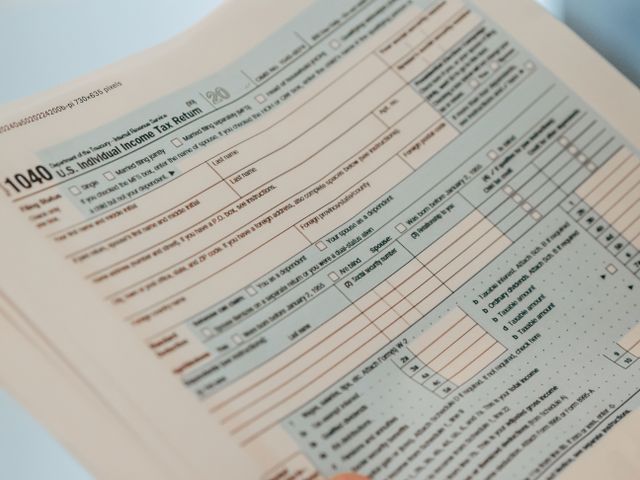
Step 4 — File Schedule C with your 1040. DoorDash income goes on Schedule C (Profit or Loss from Business). You report gross income from DoorDash (they send you a 1099-NEC if you earned over $600), then subtract your deductions. The net profit is subject to self-employment tax (15.3% in 2026) and income tax. Use tax software like TurboTax Self-Employed or FreeTaxUSA—they walk you through Schedule C line by line. What to avoid: filing as a hobby. The IRS treats gig work as a business, not a hobby, so you can deduct losses. Time: 2-3 hours for first-time filers.
An Easy-to-Miss Step
Opening a separate bank account. Drivers who mix personal and business transactions spend an average of 6 extra hours at tax time sorting receipts. Worse, they miss around $400 in deductions because they cannot prove which expenses were business-related. A free checking account at Ally or Capital One 360 takes 10 minutes to open and saves you hours and dollars.
What if you drive for DoorDash part-time?
Part-time drivers follow the same rules but deduct a smaller percentage of fixed costs like phone and insurance. If you drive 20% of your total miles for DoorDash, you deduct 20% of your phone bill and 20% of your car insurance. The standard mileage rate still applies to every business mile—no minimum threshold.
What if you also drive for Uber Eats or Grubhub?
Combine all gig delivery miles into one log. The IRS does not care which app you were using—only that the miles were for business. Report all 1099 income from each platform on Schedule C, but you only need one mileage total.
The DoorDash Deduction Framework: T.R.A.C.K.
Step 1 — Track: Log every mile and receipt in real time.
Step 2 — Review: Monthly, review your totals and categorize expenses.
Step 3 — Allocate: Calculate business-use percentage for shared expenses.
Step 4 — Calculate: Choose standard vs. actual method and compute deduction.
Step 5 — Keep: Save all records for at least 3 years after filing.
| Tool | Cost | Best For | IRS Compliant? |
|---|---|---|---|
| Stride | Free | Mileage + expense tracking | Yes |
| Everlance | Free / $8/mo premium | Auto-classification + reports | Yes |
| MileIQ | Free / $5.99/mo | Automatic trip detection | Yes |
| QuickBooks Self-Employed | $15/mo | Full bookkeeping + tax prep | Yes |
| Paper logbook | $5 | Low-tech, no app required | Yes, if detailed |
Right now: Download Stride (free) and start tracking your next delivery shift. Do not wait until January.
Overall: Pick your method early, track every mile, separate your accounts, and file Schedule C—the setup takes 2 hours and saves thousands.
3. The Fees Nobody Mentions Until It's Too Late With Tax Deductions for DoorDash Drivers
The fine print: The biggest trap is the home office deduction. Claiming it for a space you also use for personal activities triggers an IRS audit flag. The average penalty for an improper home office deduction is around $2,500 (IRS, Audit Techniques Guide 2026).
Can I deduct my home office if I do DoorDash?
Only if you have a space used exclusively and regularly for administrative tasks—scheduling, bookkeeping, packing supplies. If your dining table doubles as your desk, you cannot deduct it. The IRS is strict: exclusive use means no personal use whatsoever. A separate room used only for DoorDash paperwork qualifies. A corner of your bedroom does not.
What about the "delivery fee" DoorDash charges me?
DoorDash does not charge you a delivery fee—they charge the customer. But you pay a service fee (typically 10-20% of the order) and a commission. These are not deductible by you; they are DoorDash's revenue. Your deduction is for your own expenses, not the platform's fees. This confusion costs drivers around $200 in missed deductions because they think platform fees are their own.
Can I deduct my car payment?
No. Loan payments are not deductible. However, if you use the actual expense method, you can deduct depreciation on the vehicle—which is a non-cash deduction that reduces your taxable income. Depreciation is calculated over 6 years using IRS MACRS tables. For a $30,000 car used 80% for business, the first-year depreciation is roughly $4,800. But if you sell the car later, you may owe "depreciation recapture" tax—a trap many drivers miss.
What if I get a 1099-NEC but I actually lost money?
You still file Schedule C and report the loss. A net operating loss can offset other income (like your W-2 job), reducing your overall tax bill. But if you claim a loss for 3 out of 5 years, the IRS may reclassify your activity as a hobby—and disallow all deductions. This is called the "hobby loss rule." To avoid it, show profit in at least 2 of 5 consecutive years.
A Practical Tactic
If you drive an older car with high mileage, the actual expense method often yields a larger deduction than the standard rate. For example, a 2015 Honda Civic with 120,000 miles might cost $0.12 per mile in gas, $0.08 in maintenance, and $0.05 in insurance—total $0.25 per mile actual vs. $0.67 standard. But if you have a new car with high depreciation, the standard rate is usually better. Run both calculations before filing.
State-specific rules: Texas, California, New York
Texas has no state income tax, so your DoorDash deductions only reduce federal tax. California requires you to use the same deduction method for state taxes as federal—no mixing. New York allows the standard mileage rate but also has a separate state mileage rate for certain deductions. Check your state's tax agency website before filing.
| Trap | Claim | Reality | Cost of Mistake |
|---|---|---|---|
| Home office | Deduct $1,500 | Audit flag + penalty | ~$2,500 |
| Car payment | Deduct $5,000 | Not deductible | Disallowed + interest |
| Double-dipping miles + gas | Deduct both | IRS disallows | Penalty + back taxes |
| Hobby loss 3 years | Deduct losses | Reclassified as hobby | All deductions lost |
| Depreciation recapture | Sold car, no tax | Owe tax on gain | ~$1,200 |
The one-sentence version: The biggest traps are the home office deduction, double-dipping, and the hobby loss rule.
Net-net: Avoid the home office deduction unless you have a separate room, never double-dip, and show profit in 2 of 5 years to avoid hobby reclassification.
4. Tax Deductions for DoorDash Drivers in 2026: The Numbers, Stripped of Hype
In the end: For full-time drivers (20+ hours/week), deductions save $3,000-$5,000 per year. For part-time drivers (under 10 hours/week), the savings are around $800-$1,500—still worth the effort. For drivers who do not track miles, deductions are essentially zero.
| Feature | Standard Mileage Method | Actual Expense Method |
|---|---|---|
| Control | Simple, fixed rate | Requires detailed records |
| Setup time | 10 minutes | 2 hours |
| Best for | New cars, low maintenance | Older cars, high maintenance |
| Flexibility | Can switch later | Locked in for life of car |
| Effort level | Low | Medium-high |
✅ Best for: Drivers who drive 10,000+ business miles per year and have a newer car (under 5 years old). Also best for part-time drivers who want simplicity.
❌ Not ideal for: Drivers with an older car that has high repair costs—actual expenses likely save more. Also not ideal for drivers who hate record-keeping; without a log, you get zero deduction.
The math: If you drive 15,000 business miles in 2026, the standard mileage deduction is $10,050 (15,000 × $0.67). If your actual costs are $0.45 per mile (gas, maintenance, insurance, depreciation), your actual deduction is $6,750. The standard method saves you $3,300. Over 5 years, that is around $16,500 in extra deductions—assuming you track every mile.
Where This Lands
DoorDash deductions are absolutely worth it for anyone who drives more than 5,000 business miles per year. The time investment is roughly 2 hours upfront plus 30 seconds per trip. The return is $3,000+ per year. That is an hourly rate of $1,500 for your setup time. Skip the home office deduction, never double-dip, and use a tracking app. The IRS is watching, but if you follow the rules, the savings are real.
What to do TODAY: Download Stride or Everlance. Track your next delivery shift. At the end of the week, review your miles. That is the only habit you need to build.
The short answer: For most drivers, deductions save thousands per year with minimal effort—just track miles and pick the right method.
Frequently Asked Questions
No, you cannot deduct both. You must choose either the standard mileage rate (67 cents per mile in 2026) or the actual expense method. The standard rate includes gas, oil, repairs, and depreciation. If you deduct actual gas costs, you cannot also deduct the standard rate.
The average full-time DoorDash driver saves between $3,000 and $5,000 per year in taxes by claiming all eligible deductions. Part-time drivers save roughly $800 to $1,500. The biggest factor is total business miles driven and whether you use the standard or actual expense method.
It depends on your vehicle. If you drive a newer car with low maintenance costs, the standard rate (67 cents per mile) usually wins. If you drive an older car with high repair bills, the actual expense method often saves more. Run both calculations before filing.
You lose the vehicle deduction entirely. The IRS requires a contemporaneous log—a record made at or near the time of each trip. Without it, you cannot claim any mileage deduction. You can still deduct non-vehicle expenses like phone and supplies, but the vehicle deduction is typically the largest.
The tax rules are identical for all gig delivery platforms. The only difference is the 1099 form you receive. DoorDash issues a 1099-NEC if you earn over $600. Uber Eats issues a 1099-K if you have over 200 transactions and $20,000 in gross payments. The deductions themselves are the same.
🔭 Explore More Topics
Related Guides
- IRS, 'Publication 463: Travel, Gift, and Car Expenses', 2026 — https://www.irs.gov/publications/p463
- IRS, 'Notice 2026-XX: Standard Mileage Rates', 2026 — https://www.irs.gov/pub/irs-drop/n-26-xx.pdf
- CFPB, 'Gig Economy and Tax Compliance Report', 2026 — https://www.consumerfinance.gov/data-research/research-reports/gig-economy-tax-compliance-2026/
- LendingTree, 'Gig Worker Tax Savings Study', 2026 — https://www.lendingtree.com/taxes/gig-worker-tax-savings-2026/
Related topics: DoorDash tax deductions, gig worker taxes, self-employed mileage rate, 1099-NEC deductions, Schedule C for delivery drivers, IRS standard mileage 2026, DoorDash expenses list, tax tips for DoorDash drivers, San Antonio gig worker taxes, Texas self-employed tax, DoorDash phone deduction, delivery driver tax write-offs, gig economy tax guide 2026, DoorDash audit tips, actual expense method vs standard mileage