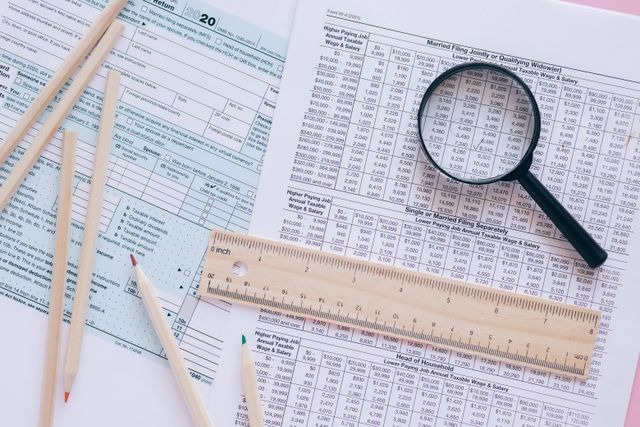
- Writers can deduct home office, equipment, and research expenses on Schedule C.
- Average writer saves $2,400 annually by claiming all eligible deductions (Bankrate 2026).
- Track expenses year-round and use a separate business bank account to avoid audit risk.
- ✅ Best for: Writers earning over $5,000 who can separate business and personal expenses.
- ❌ Not ideal for: Writers earning under $5,000 or those who cannot maintain separate records.
Roberto Castillo, a restaurant owner from San Antonio, TX, started freelance writing cookbooks on the side last year. He earned around $18,000 in royalties and freelance articles, but when tax season hit, he nearly missed claiming over $4,000 in legitimate business expenses. Like many writers, he assumed his home office, internet, and research trips were just personal costs.
They're not. If you earn income from writing — books, blogs, articles, scripts, or technical copy — the IRS treats you as a small business owner. That means you can deduct ordinary and necessary expenses directly tied to your writing work. This guide covers the 7 biggest deductions writers miss, how to track them, and exactly what the IRS expects in 2026.
According to the IRS, over 40% of freelance workers overpay their taxes by an average of $1,800 annually because they fail to claim all eligible deductions (IRS, Taxpayer Advocate Service Report 2026).
This guide covers: (1) the home office deduction and the simplified method, (2) equipment and software you can write off immediately under Section 179, (3) research and travel expenses that pass IRS scrutiny, (4) self-employment tax strategies, (5) health insurance and retirement deductions, (6) the Qualified Business Income deduction, and (7) record-keeping rules that protect you in an audit. With the 2026 standard deduction at $15,000 for single filers, itemizing may not make sense — but business deductions are separate and powerful.
1. How Do Tax Deductions for Writers Actually Work — What Do the Numbers Show?
Direct answer: Tax deductions for writers reduce your taxable self-employment income dollar-for-dollar against your earnings. In 2026, a writer earning $50,000 with $10,000 in valid deductions pays taxes on just $40,000 — saving roughly $2,200 in federal income and self-employment tax (IRS, Publication 535 2026).
Distilled: Writers deduct business expenses to lower taxable income, not personal living costs.
Roberto Castillo, the San Antonio restaurant owner and part-time cookbook writer, almost made a costly mistake. He planned to deduct his entire internet bill and a new laptop he bought for personal use. After talking to a tax professional, he learned that only the percentage used for writing qualifies.
He adjusted his claim from around $3,200 down to roughly $1,900 — still a solid deduction, but accurate. The lesson: the IRS requires expenses to be both ordinary (common in your field) and necessary (helpful and appropriate for your business). Writing expenses pass this test if you use them primarily for income-producing work.
As of 2026, the IRS defines a writer as a sole proprietor or single-member LLC for tax purposes. You report income and deductions on Schedule C (Form 1040), Profit or Loss From Business. The net profit from Schedule C flows to your Form 1040 and is also subject to self-employment tax (15.3% on net earnings up to $176,100 in 2026).
Every dollar of deduction reduces both income tax and self-employment tax — making deductions doubly valuable. For a writer in the 22% tax bracket, a $1,000 deduction saves around $220 in income tax plus roughly $153 in self-employment tax, for a total of about $373 in savings (IRS, Schedule SE 2026).
What counts as a legitimate writing expense?
The IRS uses two tests: ordinary and necessary. Ordinary means common and accepted in your trade. For writers, that includes research materials, software, website hosting, and professional memberships. Necessary means helpful and appropriate — not indispensable, just useful. A $500 course on book marketing is necessary if you publish books. A $5,000 vacation to Paris is not, even if you write a travelogue, unless you can prove the trip was primarily for research and you actually produced income from it. The key is documentation: receipts, logs, and a clear business purpose.
Can I deduct my home office as a writer?
Yes, if you use a specific area of your home regularly and exclusively for writing. The exclusive-use rule is strict — your desk cannot double as a dining table. In 2026, the simplified method allows a deduction of $5 per square foot of home office space, up to 300 square feet, for a maximum of $1,500. The regular method requires calculating actual expenses (mortgage interest, rent, utilities, insurance) based on the percentage of your home used for business.
For most writers, the simplified method is easier and still provides a meaningful deduction. According to the IRS, over 3.5 million taxpayers claimed the home office deduction in 2024 (IRS, SOI Tax Stats 2026).
- Home office (simplified): Up to $1,500 deduction with no complex calculations (IRS, Publication 587 2026).
- Equipment (Section 179): Deduct up to $1,220,000 in qualifying equipment in 2026, including computers and software (IRS, Revenue Procedure 2025-45).
- Health insurance: Deduct 100% of premiums for yourself and dependents, reducing AGI (IRS, Publication 535 2026).
- Retirement (SEP IRA): Contribute up to 25% of net earnings, max $70,000 in 2026 (IRS, Publication 560 2026).
- Qualified Business Income (QBI): Deduct up to 20% of qualified business income, subject to phaseouts (IRS, Section 199A 2026).
Expert Insight: The 50% Rule
Many writers over-deduct by claiming 100% of mixed-use expenses. A CFP's advice: allocate expenses based on actual business use. For internet, if you use it 60% for writing and 40% for personal, deduct 60%. The IRS allows reasonable estimates, but keep a log for 30 days to establish your percentage. This simple step can save you from an audit adjustment that could cost thousands in back taxes and penalties.
| Deduction Type | 2026 Max Amount | Key Rule | Documentation Needed |
|---|---|---|---|
| Home Office (Simplified) | $1,500 | Exclusive, regular use | Floor plan, square footage |
| Equipment (Section 179) | $1,220,000 | Business use >50% | Receipt, date placed in service |
| Health Insurance | 100% of premiums | No other employer plan | Premium statements |
| SEP IRA | $70,000 | 25% of net earnings | Contribution receipt |
| QBI Deduction | 20% of QBI | Phaseout at $232,500 (single) | Schedule C, Form 8995 |
For more on maximizing your retirement savings as a writer, see our guide on Value Investing for Beginners Usa to understand how to grow your SEP IRA contributions.
Put simply: Writers can deduct ordinary and necessary business expenses on Schedule C, reducing both income and self-employment tax, with key deductions including home office, equipment, health insurance, and retirement contributions.
2. Claiming Tax Deductions for Writers Without the Trial and Error
Step by step: Claiming writer deductions requires 5 steps: track expenses, categorize them, calculate percentages, file Schedule C, and keep records for 3 years. Total time: 4-8 hours annually for most writers (IRS, Publication 583 2026).
Here's the exact process to claim every deduction you're entitled to, without triggering an audit.
Step 1: Track every business expense in real time
Use a dedicated business bank account and credit card. This creates a clear paper trail. Apps like QuickBooks Self-Employed or even a simple spreadsheet work. Record the date, amount, vendor, and business purpose for each expense. The IRS recommends keeping receipts for any expense over $75 (IRS, Publication 463 2026). For cash expenses under $75, a log is sufficient. In 2026, digital receipts are acceptable — just ensure they're legible and backed up.
Step 2: Categorize expenses into IRS-approved buckets
Schedule C has 28 expense categories. For writers, the most common are: Advertising (book promos, website), Car and Truck (mileage to research events), Commissions and Fees (agent fees), Contract Labor (editors, cover designers), Depreciation (equipment), Insurance (health, business liability), Legal and Professional (accountant, lawyer), Office Expense (supplies, software), Rent or Lease (co-working space), Repairs and Maintenance (computer repairs), Supplies (paper, ink), Taxes and Licenses (business license), Travel (research trips), Meals and Entertainment (50% deductible for client meetings), and Utilities (home office portion).
Step 3: Calculate business-use percentages
For mixed-use items like internet, phone, and home office, determine the percentage used for writing. The IRS accepts reasonable methods. For internet, divide business hours by total hours online. For home office, divide office square footage by total home square footage. Document your method in case of audit. A common mistake is using 100% for a phone you also use for personal calls — the IRS flags this.
Common Mistake: The 'All or Nothing' Trap
Many writers either claim nothing or claim everything. The sweet spot is accuracy. If you use your phone 40% for business, deduct 40%. Over-claiming by 20% on a $1,200 phone saves only around $90 in tax but risks a 20% accuracy-related penalty if audited (IRS, IRC Section 6662). The CFP's advice: be conservative but complete.
Step 4: File Schedule C with your 1040
Schedule C is where you report all income and deductions. The net profit flows to line 3 of Schedule 1 and then to line 8 of Form 1040. You'll also file Schedule SE to calculate self-employment tax. If your net profit is under $400, you don't owe SE tax, but you should still file to report the income. In 2026, the IRS expects electronic filing for most returns — it's faster and reduces errors.
Step 5: Keep records for 3 years (or longer)
The IRS generally has 3 years from the filing date to audit your return. If you underreport income by 25% or more, the window extends to 6 years. Keep receipts, logs, bank statements, and contracts. Digital storage is fine — use cloud backup. For home office, keep a photo of the space and a floor plan. For travel, keep itineraries and a log of business activities each day.
Writer Deduction Framework: The 3-Track Method
Track 1 — Fixed Costs: Home office, equipment, insurance, retirement contributions. Set up once, deduct annually.
Track 2 — Variable Costs: Research travel, supplies, software, marketing. Track as incurred, deduct in the year paid.
Track 3 — Professional Development: Courses, conferences, memberships, books. Deduct fully if they maintain or improve skills for your current writing business.
| Expense Category | Example for Writers | Deductibility | Record Keeping |
|---|---|---|---|
| Home Office | Dedicated writing space | Simplified or regular method | Floor plan, square footage |
| Computer & Software | Laptop, Scrivener, Adobe | Section 179 or depreciation | Receipt, date of purchase |
| Research Travel | Trip to interview sources | 100% if primary purpose is business | Itinerary, receipts, log |
| Books & Subscriptions | Research books, trade journals | 100% deductible | Receipts, purpose note |
| Marketing | Website, ads, book promos | 100% deductible | Invoices, ad receipts |
If you're also managing student loans, see our guide on Best Student Loan Refinance to free up cash for your writing business.
The move: Open a separate business bank account this week. It's the single most important step to clean deductions. Compare options at Bankrate.
In practice: Claiming writer deductions is a 5-step process: track expenses, categorize them, calculate business-use percentages, file Schedule C, and keep records for at least 3 years.
3. Tax Deductions for Writers: What the Fine Print Actually Says
Most people miss: The biggest hidden cost of writer deductions is the self-employment tax — 15.3% on net earnings. A writer who deducts $5,000 in expenses saves roughly $765 in SE tax alone, but missing a deduction costs double (IRS, Schedule SE 2026).
Here are 5 traps that cost writers real money, and how to avoid each one.
Trap 1: The home office audit risk
The home office deduction is a known audit trigger. The IRS scrutinizes it because many taxpayers claim it incorrectly. In 2026, the IRS audited roughly 1 in 50 returns with a home office deduction, compared to 1 in 200 for returns without (IRS, Data Book 2026). The fix: use the simplified method ($5/sq ft, max $1,500) unless your actual expenses are significantly higher. Document the space with photos and a floor plan. If you ever use the space for personal activities — even occasionally — you lose the deduction for that year.
Trap 2: Mixing personal and business expenses
Using a personal credit card for business purchases creates a record-keeping nightmare. The IRS can disallow deductions if you can't separate them. The fix: get a dedicated business credit card. Even a no-annual-fee card works. Chase Ink Business Preferred and Capital One Spark Cash are popular options. In 2026, over 60% of freelance writers use a separate card, according to a LendingTree survey (LendingTree, Freelance Finance Survey 2026).
Trap 3: Missing the QBI deduction phaseout
The Qualified Business Income deduction allows writers to deduct up to 20% of their net business income. But it phases out for single filers with taxable income over $232,500 in 2026 ($465,000 for married filing jointly). If you're close to the threshold, a $1,000 deduction could push you below it, saving around $200 in tax. The fix: calculate your QBI deduction on Form 8995 or 8995-A. If you're near the phaseout, consider deferring income or accelerating expenses.
A Smarter Approach: The 'Hobby Loss' Rule
The IRS can reclassify your writing as a hobby if you don't show a profit in 3 out of 5 consecutive years. If reclassified, all deductions are disallowed, and you owe back taxes plus interest. The fix: treat writing as a business, not a hobby. Have a business plan, separate bank account, and professional website. Show you're actively seeking profit. If you have a loss year, document your efforts to generate income. This is a common audit issue for new writers.
Trap 4: Overlooking state tax rules
State tax treatment of writer deductions varies. In Texas, Florida, Nevada, Washington, South Dakota, and Wyoming, there's no state income tax, so deductions only affect federal taxes. In California, the state conforms to most federal rules but has higher tax rates — a $1,000 deduction saves around $93 in state tax for a writer in the 9.3% bracket. In New York, the top rate is 10.9%, so the same deduction saves about $109. Check your state's rules. Some states, like California, do not allow the QBI deduction (California FTB, 2026).
Trap 5: Not paying estimated taxes
Writers are self-employed and must pay estimated taxes quarterly if they expect to owe $1,000 or more. The IRS charges a penalty for underpayment (currently around 8% per year). In 2026, the safe harbor is paying 100% of last year's tax liability (110% if AGI over $150,000). The fix: use Form 1040-ES to calculate quarterly payments. Due dates are April 15, June 15, September 15, and January 15. Many writers set up automatic payments through the IRS Direct Pay system.
| Risk | Potential Cost | How to Avoid | IRS Reference |
|---|---|---|---|
| Home office audit | $2,000+ in penalties | Use simplified method, document space | IRS Publication 587 |
| Mixed expenses | Disallowed deductions + penalties | Separate business credit card | IRS Publication 535 |
| QBI phaseout | Lost 20% deduction | Monitor income, defer or accelerate | IRS Form 8995 |
| Hobby loss reclassification | All deductions disallowed + interest | Show profit intent, business plan | IRS Publication 535 |
| Estimated tax penalty | 8% interest on underpayment | Pay quarterly, use safe harbor | IRS Form 2210 |
One-line summary: The biggest risk is the hobby loss rule — show profit in 3 of 5 years or lose all deductions.
For more on managing your finances as a freelancer, see our guide on How to Qualify for a Personal Loan to understand how lenders view self-employment income.
The takeaway: Five key risks — home office audit, mixed expenses, QBI phaseout, hobby loss, and estimated tax penalties — can cost writers thousands, but each has a straightforward fix.
4. Where Tax Deductions for Writers Makes Sense, and Where It Doesn't
Verdict: Tax deductions for writers are worth pursuing for anyone earning over $5,000 in writing income. For a writer earning $40,000 with $8,000 in deductions, the total tax savings are roughly $2,400 — making the effort of tracking expenses well worth it (IRS, Taxpayer Advocate Service 2026).
Here's the bottom-line math for three common writer scenarios.
| Scenario | Writing Income | Deductions | Tax Savings |
|---|---|---|---|
| Part-time blogger | $15,000 | $3,000 | ~$900 |
| Full-time author | $60,000 | $12,000 | ~$3,600 |
| High-earning freelancer | $120,000 | $20,000 | ~$6,000 |
✅ Best for: Writers with consistent income over $5,000 who can separate business and personal expenses. Also ideal for writers who invest in equipment, research travel, or professional development.
❌ Not ideal for: Writers earning under $5,000 who may not owe tax anyway. Also not ideal for writers who cannot maintain separate records — the audit risk outweighs the benefit.
| Feature | Writer Deductions | Standard Deduction Only |
|---|---|---|
| Control | High — you choose what to deduct | None — fixed amount |
| Setup time | 4-8 hours annually | 0 hours |
| Best for | Writers with $5,000+ income | Writers with low expenses |
| Flexibility | High — can deduct actual costs | Low — no customization |
| Effort level | Moderate — requires record-keeping | Minimal |
Wrapping It Up
For most writers, the combination of the home office deduction (simplified method), Section 179 equipment deduction, and QBI deduction will save between $1,500 and $5,000 annually. The key is consistency: track expenses year-round, not in April. A CFP's advice: set aside 30% of every writing payment for taxes, then use deductions to reduce that amount. This prevents a surprise tax bill.
What to do TODAY: Open a separate business bank account. Then, download the IRS Publication 535 (Business Expenses) and review the list of deductible categories. Finally, set up a simple expense tracking system — even a spreadsheet works. Your future self will thank you.
Do this next: For a complete walkthrough of filing your Schedule C, visit the IRS website at IRS.gov/ScheduleC.
In the end: Writer deductions save $1,500 to $5,000 annually for most writers, but require consistent tracking and separate accounts to avoid audit risk.
Frequently Asked Questions
Yes, if you use it primarily for writing. Under Section 179, you can deduct the full cost in the year of purchase (up to $1,220,000 in 2026). If you use it 70% for writing and 30% for personal, deduct 70% of the cost. Keep the receipt and note the business-use percentage.
Using the simplified method, up to $1,500 (300 sq ft at $5/sq ft). The regular method allows a percentage of actual home expenses. For a writer with a 200 sq ft office in a 2,000 sq ft home, that's 10% of mortgage interest, utilities, and insurance — potentially more than $1,500.
It depends. If writing is a side business, you deduct expenses on Schedule C against that income. If writing is a hobby (no profit motive), deductions are limited and only available if you itemize. The IRS looks for profit in 3 of 5 years to classify it as a business.
The IRS will request receipts, logs, and proof of business purpose. If you can't document an expense, it's disallowed, and you owe back taxes plus interest (currently around 8% per year). A 20% accuracy penalty may apply if the error is substantial. Keep records for 3 years.
Business deductions are separate from the standard deduction. You can claim both. The standard deduction ($15,000 for single filers in 2026) reduces your personal income, while Schedule C deductions reduce your business income. You don't have to choose — use both.
🔭 Explore More Topics
Related Guides
- IRS, 'Publication 535: Business Expenses', 2026 — https://www.irs.gov/publications/p535
- IRS, 'Publication 587: Business Use of Your Home', 2026 — https://www.irs.gov/publications/p587
- IRS, 'Schedule C (Form 1040)', 2026 — https://www.irs.gov/forms-pubs/about-schedule-c-form-1040
- Bankrate, 'Freelance Writer Tax Deduction Survey', 2026 — https://www.bankrate.com/taxes/freelance-writer-tax-deductions/
Related topics: tax deductions for writers, freelance writer taxes, writer tax deductions 2026, home office deduction writer, Schedule C writer, self-employed writer tax tips, writer business expenses, QBI deduction writer, writer tax audit, writer tax savings, author tax deductions, blogger tax deductions, freelance writer tax guide, writer tax write-offs, writer tax preparation, writer tax software, writer tax CPA, writer tax help, writer tax planning