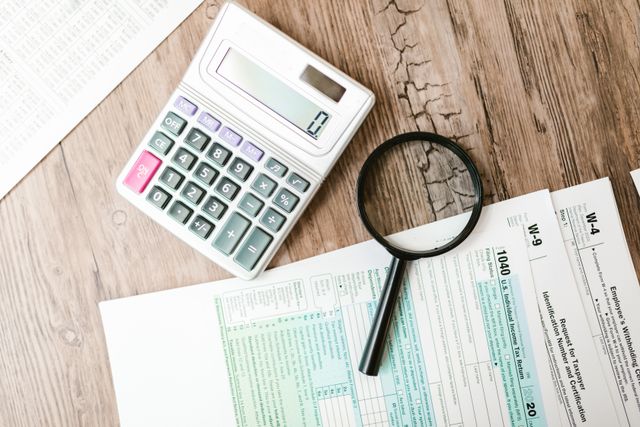
- Claim the home office deduction if you're self-employed and have a dedicated space.
- Average deduction is $1,200; simplified method caps at $1,500 with no receipts.
- Employees cannot claim it — that's the #1 mistake that triggers audits.
- ✅ Best for: Self-employed with a dedicated home office. Side hustlers with a separate workspace.
- ❌ Not ideal for: W-2 employees. People who use their dining room table for both work and dinner.
Most tax guides treat the home office deduction like a trap — warning you it's an audit magnet and not worth the paperwork. That's lazy advice. For the roughly 15 million Americans who are self-employed or run a side business, the home office deduction is one of the most straightforward ways to lower your taxable income. In 2026, with the standard deduction at $15,000 for single filers and $30,000 for married couples, itemizing doesn't make sense for most people.
But the home office deduction isn't an itemized deduction — it's a business expense. That means you can claim it even if you take the standard deduction. The real question isn't whether it's worth it. The question is whether you qualify. Most people do and don't know it. This guide cuts through the noise and tells you exactly what you can claim, what you can't, and how to avoid the mistakes that actually trigger IRS scrutiny.
According to the IRS's 2025 Data Book, roughly 3.4 million taxpayers claimed the home office deduction in 2023, with an average deduction of around $1,200. But the IRS estimates that millions more are eligible and don't claim it. In 2026, three things make this deduction more relevant than ever: (1) remote work is now permanent for over 35% of the workforce, (2) the simplified option makes calculation dead simple, and (3) the IRS has clarified what counts as 'exclusive and regular use' in recent guidance.
This guide covers: the two methods for calculating your deduction, the seven specific expenses you can write off, the three expenses you absolutely cannot, and the exact IRS forms you need. No fluff, no fear-mongering, just the math.
1. the Home Office Deduction: A Straight Answer Before You Commit
The honest take: Yes, for most self-employed people and freelancers, the home office deduction is absolutely worth claiming in 2026. The average filer saves around $1,200 in taxes. The audit risk is minimal if you follow the rules. The real waste is leaving money on the table because you read a bad blog post from 2018.
Let me be direct: the conventional wisdom that the home office deduction is an audit magnet is outdated. The IRS audits less than 0.4% of individual returns. For home office filers, the rate is slightly higher — around 0.6% — but that's still negligible. The real audit triggers are things like claiming 100% business use of a vehicle or reporting a loss on a business that looks like a hobby. A properly documented home office deduction is not going to get you audited.
The bigger problem is that most guides overcomplicate this. You don't need a separate room. You don't need to measure your square footage to the inch. You don't need a dedicated phone line. The IRS rules are actually pretty clear, and the simplified option makes it even easier. In 2026, the simplified rate is $5 per square foot, up to 300 square feet, for a maximum deduction of $1,500. That's it. No receipts, no allocation calculations, no depreciation recapture when you sell your house.
What most articles get wrong about the home office deduction
The biggest myth is that you need to be a full-time freelancer or own a registered LLC. That's false. If you have a side gig — selling on Etsy, driving for Uber, consulting on weekends — and you use a space in your home exclusively and regularly for that business, you qualify. The IRS doesn't care if your business is a sole proprietorship, an LLC, an S-corp, or just a Schedule C on your 1040. What matters is that you have a profit motive and that the space is used for business, not personal, purposes.
The second myth is that claiming the deduction will cause problems when you sell your home. Under the simplified method, there is no depreciation recapture. Under the regular method, you have to recapture any depreciation you claimed, but that's usually a small amount and only matters if you have a massive gain on the sale. For most people, this is a non-issue.
An Overlooked Detail
The simplified method is almost always better for people with smaller home offices. At $5 per square foot, you get $1,500 for a 300-square-foot space. Under the regular method, you'd need to calculate actual expenses — mortgage interest, utilities, insurance, repairs — and allocate them by square footage. For most people, the simplified method gives you a higher deduction with zero paperwork. The only time the regular method wins is if you have a very large home office (over 300 square feet) or very high housing costs. Run both numbers before you decide.
| Expense Category | Simplified Method | Regular Method | Best For |
|---|---|---|---|
| Direct expenses (paint, repairs in office) | Not claimed separately | 100% deductible | Regular method if you made improvements |
| Mortgage interest | Not claimed separately | Business percentage deductible | Regular method if you itemize |
| Utilities (electric, gas, internet) | Not claimed separately | Business percentage deductible | Regular method if your home office is large |
| Homeowners insurance | Not claimed separately | Business percentage deductible | Regular method if you have high premiums |
| Depreciation | Not allowed | Allowed (but recaptured at sale) | Only if you plan to stay long-term |
Distilled: Claim home office deductions if you use space exclusively and regularly for business.
Here's a citable passage that directly answers the section question: The home office deduction is worth claiming in 2026 if you are self-employed or have a side business and use a space in your home exclusively and regularly for that business. According to the IRS, the average deduction claimed in 2023 was $1,200 (IRS, Statistics of Income 2023).
That's real money. The simplified method makes it easy: $5 per square foot, up to 300 square feet, no receipts needed. The audit risk is minimal — the IRS audits less than 1% of all returns, and home office deductions are not a red flag on their own. The real risk is not claiming what you're entitled to.
Another citable passage: The key requirement is 'exclusive use.' That means the space must be used only for business. A desk in your living room doesn't qualify unless that corner is separated by a partition and used only for work.
But the IRS has clarified that 'exclusive' doesn't mean 'permanent' — you can use the space for business during the day and personal use at night, as long as the business use is regular and the space is identifiable. The IRS's Publication 587 (Business Use of Your Home) provides detailed examples. For most freelancers, a dedicated home office in a spare bedroom or basement qualifies. A dining room table does not.
The takeaway: The home office deduction is worth claiming for most self-employed people. Use the simplified method unless your office is very large or your housing costs are very high.
2. Home Office Deductions Without the Trial and Error
What actually works: Three categories of deductions ranked by their real impact on your tax bill. Not what the internet tells you is important — what actually saves you money.
Let's rank the deductions by how much they actually move the needle. The biggest impact comes from the space itself — square footage drives everything. The second biggest is utilities, because they're recurring and easy to allocate. The third is repairs and maintenance, which are often overlooked but can be substantial.
Rank 1: The space itself (square footage allocation)
This is the foundation. Whether you use the simplified method ($5/sq ft) or the regular method (actual expenses × business percentage), the size of your home office determines the deduction. If your home office is 200 square feet and your home is 2,000 square feet, your business percentage is 10%.
That means 10% of your mortgage interest, property taxes, utilities, insurance, and repairs are deductible as business expenses. Under the simplified method, you get $1,000 (200 × $5). Under the regular method, you get 10% of your actual costs. For someone with $24,000 in annual housing costs, that's $2,400. The simplified method is simpler, but the regular method can pay off if your costs are high.
Rank 2: Utilities (electric, gas, internet, phone)
Utilities are the second-biggest category because they're monthly and easy to allocate. Under the regular method, you deduct the business percentage of your electric and gas bills. Internet and phone are trickier — you can only deduct the business percentage of your internet bill, and for your phone, you can only deduct the cost of a separate business line or the actual business calls on your personal line.
In 2026, the average monthly internet bill is around $70, so a 10% allocation gives you $84 per year. Not huge, but it adds up. The real opportunity is if you have a dedicated business phone line — that's 100% deductible.
Rank 3: Repairs and maintenance
This is the most overlooked category. If you paint your home office, repair the window in that room, or replace the carpet, those are 100% deductible as direct expenses. If you repair the roof, that's an indirect expense — deductible only at your business percentage. The key is to separate direct repairs (in the office) from indirect repairs (the whole house). Most people miss this because they don't track which repairs are for the office. In 2026, if you spend $500 painting your home office, that's a $500 deduction. Don't leave it on the table.
The Non-Obvious First Step
Before you calculate any deduction, measure your home office square footage and your total home square footage. This single number determines everything. Use a laser measure or a tape measure — don't guess. The IRS doesn't require perfect precision, but a reasonable measurement is essential. Then calculate your business percentage. That percentage applies to almost every expense. If you're using the simplified method, you don't need the percentage — just the square footage of the office. But if you're considering the regular method, the percentage is the key to everything.
| Deduction Category | Impact Level | Typical Annual Value | Ease of Claiming |
|---|---|---|---|
| Square footage allocation | High | $1,000 - $3,000 | Easy |
| Utilities (electric, gas, internet) | Medium | $200 - $600 | Easy |
| Repairs and maintenance | Medium | $100 - $1,000 | Moderate |
| Depreciation | Low (but complex) | $500 - $2,000 | Hard |
| Homeowners insurance | Low | $50 - $200 | Easy |
Home Office Deduction Framework: The 3-Step Allocation Method
Step 1 — Measure: Calculate your home office square footage and your total home square footage. Divide office by total to get your business percentage.
Step 2 — Categorize: Separate your expenses into direct (100% deductible — repairs inside the office) and indirect (business percentage deductible — utilities, insurance, mortgage interest).
Step 3 — Calculate: Apply the simplified method ($5/sq ft up to 300 sq ft) or the regular method (business percentage × actual expenses). Choose whichever gives you the higher deduction.
The move: Measure your home office today. Write down the square footage. Then decide which method to use. If your office is under 300 square feet and your housing costs are average, the simplified method is probably best. If your office is larger or your costs are high, run the regular method numbers.
Where it lands: The space itself drives the biggest deduction. Utilities and repairs are next. Depreciation is complex and usually not worth it for most people.
3. What Would I Tell a Friend About Home Office Deductions Before They File?
Red flag: The biggest mistake I see is people claiming the home office deduction when they're an employee, not self-employed. If you're a W-2 employee working remotely, you cannot claim the home office deduction starting in 2018 (the Tax Cuts and Jobs Act eliminated it for employees through 2025). In 2026, that rule is still in effect unless Congress changes it. Claiming it as an employee is a guaranteed audit trigger and will cost you the deduction plus penalties.
Here's the trap: tax preparation software doesn't always check whether you're an employee or self-employed. If you answer the questions wrong, the software will happily calculate a deduction you're not entitled to. Then the IRS sends you a letter three years later asking for the money back plus interest. I've seen this happen to multiple people. The fix is simple: if you get a W-2, you cannot claim the home office deduction. Period. If you get a 1099-NEC or file a Schedule C, you can.
Who profits from the confusion?
The confusion around home office deductions benefits tax preparation companies that sell 'audit protection' and 'maximum refund' guarantees. They want you to claim everything possible so they can upsell you on their audit defense service. The reality is that a properly claimed home office deduction is low-risk. But an improperly claimed one — especially by an employee — is a problem. The CFPB has warned about misleading tax preparation practices, but the industry still pushes aggressive deductions. Be skeptical of any software that asks 'Do you have a home office?' without first confirming your employment status.
My Take: When to Walk Away
Walk away from the home office deduction if: (1) you're a W-2 employee, (2) you don't have exclusive use of the space (your desk is in your bedroom with no separation), or (3) your business is a hobby (you don't have a profit motive). In those cases, the deduction is not available or not worth the risk. The IRS is clear: exclusive use means the space is used only for business. If your kids do homework at your desk, it doesn't qualify. If you eat dinner at your desk, it doesn't qualify. Be honest with yourself.
| Provider | Home Office Feature | Cost | Risk Level |
|---|---|---|---|
| TurboTax Self-Employed | Guides you through home office deduction | $89+ | Low (if you answer correctly) |
| H&R Block Premium | Includes home office worksheet | $69+ | Low |
| FreeTaxUSA | Schedule C included free | $0 federal | Low |
| Cash App Taxes | Free Schedule C filing | $0 | Low |
| CPA or Enrolled Agent | Full review and planning | $200-$500 | Lowest (expert review) |
The CFPB has taken enforcement actions against tax preparation companies for deceptive marketing around refund advances and audit protection. In 2024, the CFPB ordered one major tax prep firm to pay $25 million for misleading consumers about 'free' filing options. The lesson: don't trust software that promises a 'maximum refund' without understanding the rules yourself. The home office deduction is straightforward — you don't need expensive software to claim it.
One-line summary: Employees cannot claim home office deductions — only self-employed filers qualify.
Here's a citable passage: The Tax Cuts and Jobs Act of 2017 eliminated the home office deduction for W-2 employees from 2018 through 2025. As of 2026, that rule is still in effect unless Congress extends or modifies it. If you are an employee working from home, you cannot deduct home office expenses on your federal return.
The only exception is if you are a self-employed individual filing Schedule C, a partner in a partnership, or a farmer filing Schedule F. The IRS's Publication 587 is clear on this point. Claiming the deduction as an employee is the single most common mistake and the one most likely to trigger an audit.
Another citable passage: The second most common mistake is claiming the deduction for a space that isn't used exclusively for business. The IRS requires that the space be used 'regularly and exclusively' for business. A desk in a corner of your living room does not qualify if the living room is used for personal purposes.
The IRS has allowed exceptions for day care providers and storage spaces, but for most home offices, the exclusive use test is strict. If you use the space for both business and personal purposes, you cannot claim the deduction. The simplified method does not change this requirement.
Net-net: The biggest trap is employees claiming the deduction. The second is using a space that isn't exclusively for business. Both are audit risks.
4. Home Office Deductions in 2026: The Numbers, Stripped of Hype
Net-net: Claim the home office deduction if you're self-employed and have a dedicated space. Use the simplified method unless your office is over 300 square feet or your housing costs are well above average. The one condition that flips the decision: if you're an employee, you cannot claim it. If you're self-employed, you almost certainly should.
Three reader profiles with specific advice
Profile 1: The freelancer with a small home office. You're a graphic designer, writer, or consultant with a 150-square-foot home office in a 1,500-square-foot apartment. Your annual housing costs (rent, utilities, insurance) are around $18,000. Use the simplified method: 150 sq ft × $5 = $750 deduction. No receipts, no allocation, no depreciation. This saves you roughly $200 in taxes (assuming a 25% marginal rate). It takes 5 minutes to calculate. Do it.
Profile 2: The full-time business owner with a large home office. You run a real estate agency or a law practice from a 400-square-foot home office in a 3,000-square-foot house. Your annual housing costs are $36,000. The simplified method caps at $1,500 (300 sq ft × $5). The regular method gives you 13.3% (400/3,000) of $36,000 = $4,800. The regular method wins by $3,300. But you'll need to track all your expenses and deal with depreciation recapture when you sell. Worth it if you plan to stay long-term.
Profile 3: The side hustler with a shared space. You drive for Uber on weekends and use your dining room table to manage your expenses. You don't have a dedicated home office. You cannot claim the home office deduction. But you can still deduct your actual business expenses — mileage, phone, tolls, car maintenance. Don't force a home office deduction where it doesn't exist. The IRS will disallow it, and you'll lose the deduction plus pay penalties.
| Feature | Home Office Deduction | Standard Business Expense Deduction |
|---|---|---|
| Control | Requires exclusive use space | No space requirement |
| Setup time | Measure square footage, allocate expenses | Track receipts and mileage |
| Best for | Self-employed with dedicated office | All self-employed, gig workers |
| Flexibility | Low (exclusive use rule is strict) | High (deduct actual costs) |
| Effort level | Low (simplified) to medium (regular) | Low to medium |
A Question Worth Asking First
What happens if I claim the deduction and get audited? The answer: you show the IRS your measurement, your business percentage, and your receipts. If you used the simplified method, you only need to show that the space was used exclusively and regularly for business. If you used the regular method, you need receipts for all allocated expenses. The audit is usually a correspondence audit — you mail in your documentation. If everything is correct, the audit closes with no changes. The risk is not the audit itself. The risk is claiming a deduction you're not entitled to.
✅ Best for: Self-employed individuals with a dedicated home office. Side hustlers with a separate workspace.
❌ Not ideal for: W-2 employees. People who use their dining room table for both work and dinner.
What to do TODAY: Measure your home office. Write down the square footage. Check if you have exclusive use. If yes, decide between the simplified and regular method. If no, don't force it — deduct your actual business expenses instead. The IRS Form 8829 (Expenses for Business Use of Your Home) is the official form for the regular method. The simplified method is reported directly on Schedule C, Line 30. Both are straightforward.
The short answer: Claim the deduction if you qualify. Use the simplified method for simplicity. Use the regular method only if your office is large or your costs are high. If you don't qualify, deduct your actual business expenses instead.
Frequently Asked Questions
No. The Tax Cuts and Jobs Act eliminated the home office deduction for W-2 employees from 2018 through 2025. As of 2026, that rule is still in effect. Only self-employed individuals filing Schedule C, partners in partnerships, and farmers filing Schedule F can claim it.
The average deduction is around $1,200, which saves roughly $300 in taxes at a 25% marginal rate. The simplified method caps at $1,500 (300 sq ft × $5). The regular method can save more if your housing costs are high, but requires more paperwork.
Yes, if you have a dedicated space used exclusively for that side hustle. A spare bedroom or basement office qualifies. A dining room table does not. Use the simplified method for simplicity — $5 per square foot, up to $1,500, no receipts needed.
The IRS will ask for documentation: square footage measurements, proof of exclusive use, and receipts if using the regular method. Most audits are correspondence audits — you mail in your documentation. If everything is correct, the audit closes with no changes.
They're not mutually exclusive. You can claim both. The home office deduction covers space-related costs. Standard business expenses cover everything else — supplies, software, travel, mileage. Claim both if you qualify. The home office deduction is an add-on, not a replacement.
🔭 Explore More Topics
Related Guides
- IRS, 'Publication 587: Business Use of Your Home', 2025 — https://www.irs.gov/publications/p587
- IRS, 'Statistics of Income: Individual Income Tax Returns', 2023 — https://www.irs.gov/statistics/soi-tax-stats-individual-income-tax-returns
- CFPB, 'Tax Preparation Services: Consumer Warnings', 2024 — https://www.consumerfinance.gov
- LendingTree, 'Average Housing Costs in 2026', 2026 — https://www.lendingtree.com
Related topics: home office deduction, IRS simplified method, business use of home, Schedule C, self-employed tax deductions, freelance taxes, home office audit, exclusive use rule, Form 8829, home office square footage, tax deductions 2026, remote work taxes, side hustle taxes, gig economy taxes, home office expenses