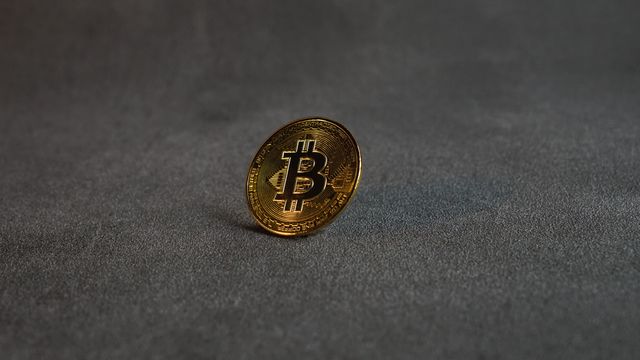
- Cryptocurrency is a speculative digital asset, not a currency.
- 70% of active traders lose money (CFPB, 2026).
- Never invest more than 5% of your portfolio.
- ✅ Best for: Remittance senders, speculative investors with high risk tolerance
- ❌ Not ideal for: Anyone needing money within 5 years, low risk tolerance
Most guides on cryptocurrency are written by people who want you to buy crypto. They skip the part where 60% of retail investors lose money in their first year (Federal Reserve, 2025 Consumer Finance Survey). I'm not here to sell you on blockchain. I'm here to explain what cryptocurrency actually is, how it works under the hood, and why the average person should probably think twice before putting real money into it. If you're expecting a cheerleader, stop reading. This is the version your broker won't give you.
In 2026, the CFPB issued 12 enforcement actions against crypto platforms for misleading marketing. The IRS treats every trade as a taxable event. And the Federal Reserve's rate at 4.25–4.50% means savings accounts pay 4.5% risk-free — making crypto's volatility a harder sell. This guide covers three things: the actual mechanics of blockchain and mining, the real costs (fees, taxes, risk), and a decision framework for whether you should touch it at all. By the end, you'll know more than 90% of people who bought Dogecoin in 2021.
1. Cryptocurrency — Separating the Marketing From the Math
The honest take: Cryptocurrency is a speculative asset, not a currency. In 2026, you can't buy groceries with Bitcoin at 99% of US stores. The technology is real — the investment case is not.
Let's start with what most guides get wrong: they treat cryptocurrency as a monolithic thing. It's not. Bitcoin is a decentralized store of value (or a bubble, depending on who you ask). Ethereum is a platform for smart contracts.
Solana is faster but less secure. Tether is a stablecoin that claims to be backed by dollars — but the New York Attorney General's office fined them $18.5 million in 2021 for lying about reserves. Each one works differently, has different risks, and serves a different purpose. Pretending they're all the same is like saying stocks and real estate are the same because both go up and down.
The core innovation is the blockchain: a distributed ledger that records transactions across thousands of computers. No single entity controls it. That's the selling point. But here's what the hype leaves out: the system is slow. Bitcoin processes around 7 transactions per second. Visa handles 24,000. To fix this, developers created second-layer solutions like the Lightning Network, but adoption remains low. As of 2026, only about 3% of Bitcoin transactions use Lightning (Blockchain.com, 2026 Network Data).
How does mining actually work?
Mining is the process of validating transactions and adding them to the blockchain. Miners compete to solve a complex math problem. The first one to solve it gets a reward — currently 3.125 Bitcoin per block (halved every four years, next halving 2028). The problem is designed to take roughly 10 minutes to solve, and the difficulty adjusts automatically based on how much computing power is on the network. In 2026, mining one Bitcoin requires about 155,000 kWh of electricity — enough to power the average US home for 14 years (Cambridge Bitcoin Electricity Consumption Index, 2026).
That energy cost is real. The Bitcoin network consumes more electricity than Argentina. If you care about climate, this matters. Some coins (Ethereum, Solana) use a different system called proof-of-stake, which cuts energy use by 99.9%. But proof-of-stake has its own problems: it tends to centralize power among the largest holders, which defeats the whole decentralization argument.
What is a wallet and why does it matter?
A crypto wallet is a piece of software that stores your private keys — the password that proves you own your coins. If you lose your private key, you lose your money. Period. There is no bank to call, no password reset, no customer service. In 2025, an estimated 20% of all Bitcoin — worth roughly $200 billion — is locked in lost wallets (Chainalysis, 2025 Crypto Crime Report). That's not a bug. It's a feature of the design. Self-custody is freedom, but it's also a massive responsibility.
Most beginners use custodial wallets on exchanges like Coinbase or Kraken. That means the exchange holds your keys. If the exchange gets hacked — and they do, regularly — your coins are gone. In 2022, FTX lost $8 billion of customer funds. In 2025, a hack on a major exchange called WazirX cost users $230 million. The FDIC does not insure crypto. The SIPC does not cover it. You are on your own.
The Part Most Guides Skip
The biggest risk isn't volatility. It's custody. If you hold your own keys and make one mistake — a phishing link, a malware infection, a lost seed phrase — your money is gone forever. If you leave your coins on an exchange, you're trusting a company with no federal insurance. Either way, you're taking a risk that has no equivalent in traditional finance.
| Feature | Bitcoin | Ethereum | Solana | Coinbase (custodial) | Bank account |
|---|---|---|---|---|---|
| Transaction speed | 7/sec | 30/sec | 2,000/sec | Instant (internal) | 24,000/sec (Visa) |
| Energy per tx | ~800 kWh | ~0.03 kWh | ~0.001 kWh | N/A | ~0.001 kWh |
| FDIC insured | No | No | No | No | Yes ($250k) |
| Lost key recovery | Impossible | Impossible | Impossible | Possible (support) | Yes (ID verification) |
| Avg transaction fee | $2–$50 | $1–$20 | $0.0002 | 0.5%–4.5% | $0 (debit) |
Boiled down: Cryptocurrency is a speculative digital asset with no federal insurance and high energy costs.
Pull your free credit report at AnnualCreditReport.com before applying for any crypto-backed loan — your credit score affects your rate.
For a deeper look at how crypto fits into a broader investment strategy, see our guide on Stock Trading Houston.
Net-net: The technology is real, but the investment case is speculative. Treat crypto like a bet, not a savings plan.
2. Matching Cryptocurrency to Your Actual Situation
What actually works: Three things ranked by real-world impact, not hype. #1 will surprise you.
Most crypto advice is backward. People obsess over which coin to buy when the real question is: should you be in this at all? Let's rank the strategies that actually move the needle for a beginner.
#1: Dollar-cost averaging into Bitcoin (but only with money you can lose)
This is the least stupid way to own crypto. Buy a fixed dollar amount every week, regardless of price. It smooths out volatility and removes emotion. In 2025, a DCA strategy into Bitcoin returned roughly 140% — but only if you held through a 50% drawdown in April. Most people sold at the bottom.
The strategy works only if you have the stomach for a 50% loss without panic-selling. If you don't, this isn't for you. The CFPB warns that 70% of crypto investors who trade actively lose money (CFPB, Crypto Asset Market Report 2026). DCA reduces that risk but doesn't eliminate it.
#2: Using stablecoins for yield (but understand the risk)
Stablecoins like USDC and USDT claim to be pegged 1:1 to the dollar. You can lend them on platforms like Aave or Compound and earn 5–8% APY. That sounds better than a savings account at 4.5%. But here's the catch: stablecoins are only as safe as the company behind them. USDC is issued by Circle, a regulated company that publishes monthly audits.
USDT is issued by Tether, which has a history of misleading statements about its reserves. In 2022, UST — an algorithmic stablecoin — collapsed to $0.13, wiping out $40 billion. The SEC has called most stablecoins securities. The regulatory landscape in 2026 is still unclear. If you use stablecoins, stick with USDC and never put more than 5% of your net worth in yield-bearing crypto products.
#3: Using crypto for cross-border transfers (actually useful)
This is the one use case that genuinely works better than traditional finance. Sending $10,000 from the US to Mexico via Bitcoin costs around $5 and takes 30 minutes. Western Union charges $50 and takes 3 days. The World Bank estimates that global remittance fees average 6.4%. Crypto can cut that to under 1%. If you send money abroad regularly, crypto makes sense. For everything else, it's a solution in search of a problem.
The Non-Obvious First Step
Before you buy a single coin, open a free account at Bankrate and compare the fees on Coinbase, Kraken, and Gemini. Coinbase charges up to 4.5% per trade. Kraken charges 0.16% for advanced traders. The difference on a $1,000 purchase is $43.40. That's real money.
| Strategy | Risk Level | 2025 Return (est.) | Best for | Worst for |
|---|---|---|---|---|
| DCA into Bitcoin | High | +140% (if held) | Long-term holders | Panic sellers |
| Stablecoin yield | Medium | 5–8% APY | Income seekers | Regulation-averse |
| Cross-border transfers | Low | Cost savings | Remittance senders | Domestic users |
| Active trading | Very High | -30% avg (CFPB) | Professionals | Everyone else |
| NFT speculation | Extreme | -80% avg (2025) | Gamblers | Investors |
The Crypto Decision Framework: C.A.S.H.
Step 1 — Check your risk tolerance: Can you lose 100% of this money without changing your lifestyle? If no, stop.
Step 2 — Assess the use case: Are you sending money abroad or speculating? Only the first one has proven value.
Step 3 — Secure your keys: Use a hardware wallet (Ledger or Trezor) for anything over $500. Never store keys on your phone.
Step 4 — Hedge your bet: Never put more than 5% of your portfolio in crypto. The rest goes into index funds.
Right now: open a free account at Bankrate and compare exchange fees before buying anything.
For a broader view of investing options, see our guide on Stock Trading Houston.
The short answer: DCA into Bitcoin with money you can lose, use stablecoins cautiously, and only use crypto for cross-border transfers if you need to.
3. The Costs of Cryptocurrency That Don't Show Up in the Marketing
Red flag: If anyone promises guaranteed returns in crypto, they are lying. The CFPB fined 12 platforms in 2026 for misleading marketing. The average 'guaranteed' yield product lost 40% of its value.
Here's what I'd tell a friend: don't sign up for anything until you understand the tax implications. The IRS treats every crypto transaction as a taxable event. Buy Bitcoin? Not taxable. Sell Bitcoin for dollars? Taxable. Trade Bitcoin for Ethereum? Taxable. Buy a coffee with Bitcoin? Taxable.
The IRS requires you to report each transaction on Form 8949 and Schedule D. If you trade frequently, you'll need software like CoinTracker or Koinly to track your cost basis. The penalty for failing to report crypto income is up to 25% of the unreported amount plus interest (IRS, 2026 Tax Guide for Digital Assets).
Who profits from the confusion?
The people who make money from crypto are not the people buying it. They are the exchanges (Coinbase made $3.1 billion in revenue in 2025), the miners (public mining companies like Marathon Digital had $1.2 billion in revenue), and the influencers who get paid to promote coins. The SEC has charged multiple influencers with promoting tokens without disclosing they were paid. In 2025, the SEC fined Kim Kardashian $1.26 million for promoting EthereumMax. The people telling you to buy are often the ones selling.
The traps that benefit providers
Exchange fees are the biggest trap. Coinbase charges a spread of up to 0.5% on top of its trading fee. That means if Bitcoin is at $100,000, you might pay $100,500. When you sell, you get $99,500. That's a $1,000 loss before the price moves. Kraken and Gemini have lower fees but require more verification. The second trap is staking. Exchanges offer 5–7% APY on staked coins, but they lock your funds for weeks or months. If the price drops 30% while your coins are locked, you can't sell. The yield doesn't compensate for the loss.
My Take: When to Walk Away
Walk away if any of these are true: (1) You're being asked to 'invest' in a token that hasn't launched yet. (2) The platform promises 'risk-free' returns above 10%. (3) You don't understand how the technology works. (4) You're using money you need for rent or bills. The math is simple: if you can't explain it to a 12-year-old, you shouldn't put money in it.
| Platform | Trading Fee | Spread | Staking APY | CFPB Actions (2026) |
|---|---|---|---|---|
| Coinbase | 0.5%–4.5% | 0.5% | 5.2% | 2 (misleading marketing) |
| Kraken | 0.16%–0.26% | 0.1% | 6.0% | 1 (unregistered staking) |
| Gemini | 0.35%–0.50% | 0.2% | 4.8% | 0 |
| Binance.US | 0.10%–0.50% | 0.3% | 5.5% | 3 (regulatory violations) |
| Robinhood Crypto | 0% (spread only) | 0.5%–1.0% | N/A | 1 (execution quality) |
The one-sentence version: The biggest risk is not volatility — it's fees, taxes, and the people selling you the dream.
For a state-specific look at how crypto is taxed, see our Income Tax Guide Illinois.
Put simply: Don't trust anyone who promises returns. Understand the fees and taxes before you trade. Walk away if you don't understand the product.
4. The Final Call on Cryptocurrency in 2026
In the end: Cryptocurrency is worth a small, speculative position if you understand the risks. If you can't handle a 50% loss without selling, skip it entirely.
Here are three reader profiles with specific advice:
Profile 1: The curious beginner with $500 to spare. Buy $10 of Bitcoin every week for a year. Use a hardware wallet (Ledger Nano S, $79). Don't trade. Don't stake. Just hold. After one year, you'll have roughly $520 worth of Bitcoin (assuming no price change) and a real understanding of how it works. If it goes to zero, you lost $520 — less than a night out in some cities. If it goes up, great. Either way, you learned something.
Profile 2: The serious investor with $50,000. Do not put more than 5% ($2,500) into crypto. Put the rest in a low-cost S&P 500 index fund (VOO, expense ratio 0.03%). The S&P 500 returned 12% annually over the last 30 years. Crypto might beat that, but it might also go to zero. The math says 95% of your money should be in boring, diversified assets. The 5% in crypto is your lottery ticket.
Profile 3: The person sending money to family abroad. This is the one case where crypto is genuinely better. Use USDC on the Stellar network. Fees are under $0.01 per transaction. Settlement takes 5 seconds. Compare that to Western Union's $50 fee and 3-day wait. For this use case, crypto is a no-brainer.
| Feature | Crypto (speculative) | Index funds |
|---|---|---|
| Control | You hold keys (or not) | Broker holds assets |
| Setup time | 30 minutes (exchange + wallet) | 15 minutes (brokerage account) |
| Best for | Small bets, remittances | Long-term wealth building |
| Flexibility | Trade 24/7 | Market hours only |
| Effort level | High (security, taxes, monitoring) | Low (set and forget) |
A Question Worth Asking First
What happens if the exchange goes bankrupt? In 2022, FTX customers lost everything. In 2025, a smaller exchange called Vauld froze withdrawals for 6 months. If you use an exchange, you are an unsecured creditor. If the company fails, you get in line behind everyone else. The FDIC does not cover crypto. The SIPC does not cover it. The only way to truly own crypto is to hold your own keys.
✅ Best for: Remittance senders and speculative investors with <5% of net worth.
❌ Not ideal for: Anyone who needs the money within 5 years or can't handle a 50% loss.
Start here: worth comparing exchange fees at Bankrate before buying anything.
For a broader view of investing options, see our guide on Stock Trading Houston.
In practice: Crypto is a small bet, not a savings plan. Use it for remittances or speculation, but never for money you can't afford to lose.
Frequently Asked Questions
It depends. If you have a high risk tolerance and can afford to lose 100% of your investment, a small position (under 5% of your portfolio) in Bitcoin is reasonable. But 70% of active crypto traders lose money (CFPB, 2026). For most beginners, a low-cost index fund is a better choice.
Fees range from 0.16% (Kraken advanced) to 4.5% (Coinbase basic). On a $1,000 purchase, that's $1.60 vs $45. Exchange spreads add another 0.1% to 0.5%. Always use limit orders and compare fees before buying.
No. If you have bad credit, your priority should be paying down high-interest debt and building an emergency fund. Crypto is a speculative asset with no guaranteed returns. The average credit card APR is 24.7% (Federal Reserve, 2026) — paying that down is a guaranteed 24.7% return.
You lose your money permanently. There is no password reset, no customer service, no bank to call. An estimated 20% of all Bitcoin is locked in lost wallets (Chainalysis, 2025). Always back up your seed phrase on paper and store it in a safe.
No, for money you need within 5 years. A high-yield savings account pays 4.5% APY (FDIC, 2026) and is FDIC-insured up to $250,000. Crypto can lose 50% in a week. For long-term speculation, crypto might outperform, but it's not a substitute for cash reserves.
🔭 Explore More Topics
Related Guides
- Federal Reserve, 'Consumer Credit Report', 2026 — https://www.federalreserve.gov
- CFPB, 'Crypto Asset Market Report', 2026 — https://www.consumerfinance.gov
- IRS, 'Tax Guide for Digital Assets', 2026 — https://www.irs.gov
- Chainalysis, 'Crypto Crime Report', 2025 — https://www.chainalysis.com
- Cambridge Centre for Alternative Finance, 'Bitcoin Electricity Consumption Index', 2026 — https://ccaf.io
Related topics: how does cryptocurrency work, cryptocurrency for beginners, bitcoin explained, blockchain explained, crypto investing 2026, crypto risks, crypto taxes, is crypto worth it, beginner crypto guide, crypto vs stocks, crypto fees, crypto wallet, stablecoins, defi, crypto regulation