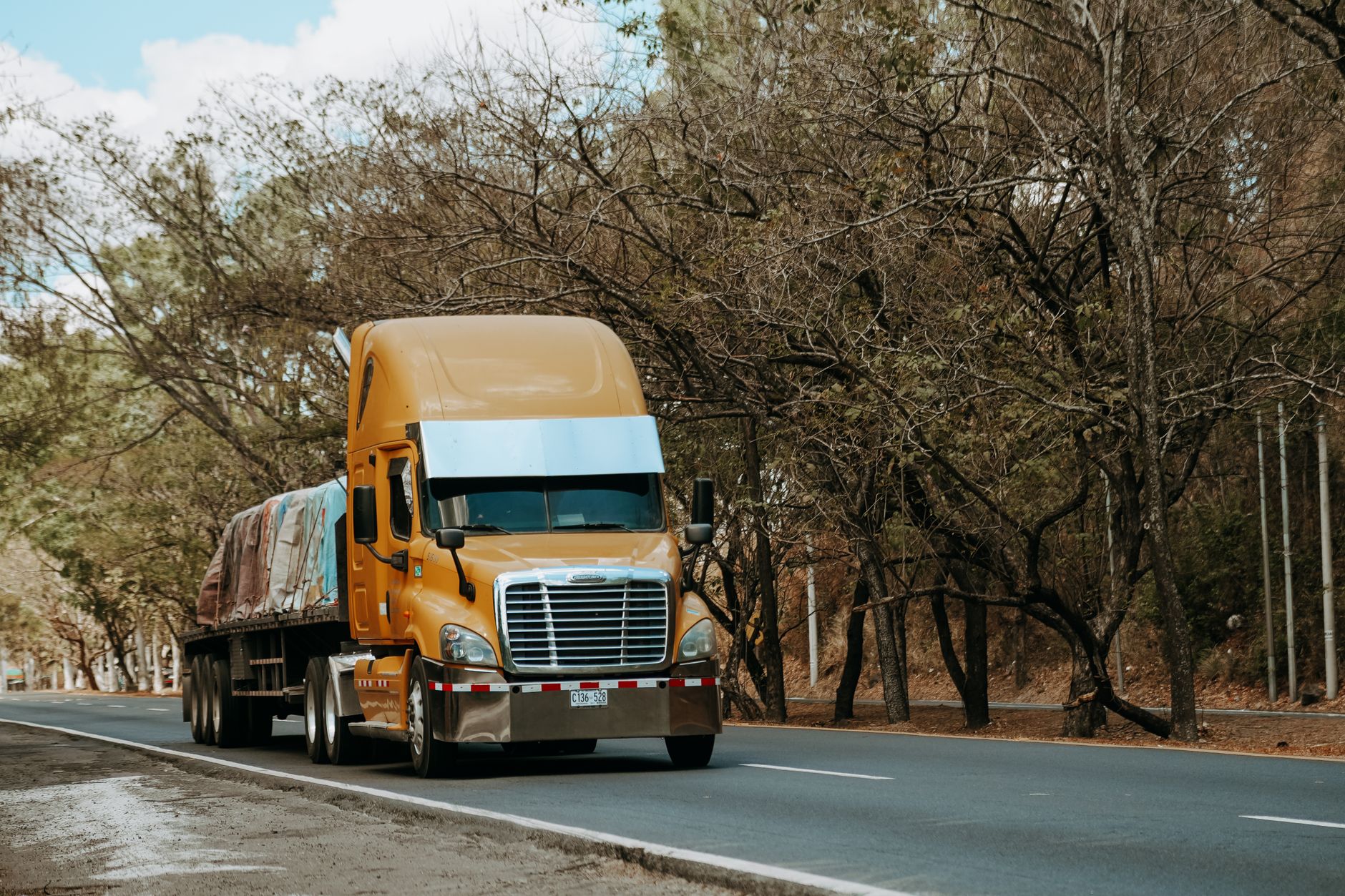
- Trucking liability insurance covers bodily injury and property damage from commercial truck accidents.
- Federal minimum is $750,000; typical costs range $8,000 to $15,000 annually per power unit in 2026.
- Nuclear verdicts and rising repair costs continue to push premiums up 5–10% annually.
- Policy works well for interstate dry van operations with clean driver records and telematics.
- Not ideal for owner-operators carrying hazardous materials or those with poor CSA scores, premiums often double.
Trucking liability insurance covers bodily injury and property damage caused by commercial trucks in operation. Federal minimums start at $750,000 for general freight, but many shippers require $1 million or more. Premiums in 2026 average $8,000 to $15,000 annually per power unit, depending on cargo, radius, and claims history.
Trucking insurance costs have climbed sharply since 2022, up roughly 25% by mid-2025, driven by nuclear verdicts, rising medical costs, and heavier replacement parts for newer tractor-trailers. Owner-operators face a different pricing environment than large fleets. This guide covers who needs which coverage, what policies cost and how to avoid common gaps that lead to denied claims.
1. What Is Trucking Liability Insurance, and Who Needs It?
What Is Trucking Liability Insurance?
Trucking liability insurance is a specialized commercial auto policy that covers bodily injury and property damage claims when a truck, tractor, trailer, or straight truck, is involved in an accident during business operations. It responds whether the vehicle is loaded, empty, or parked during a loading/unloading event, depending on policy terms.
Policies are rated by power unit (the tractor, not the trailer) and typically bundle primary liability, general liability, and cargo coverage. The federal minimum for liability insurance on motor carriers operating in interstate commerce is set by the Federal Motor Carrier Safety Administration (FMCSA) under 49 CFR §387.
Three coverage layers define a standard trucking liability policy:
- Primary auto liability, covers bodily injury and property damage to third parties. Minimum $750,000 for general freight, $1 million for passenger transport, $5 million for hazardous materials (49 CFR §387.9).
- General liability, covers non-auto incidents such as cargo damage at a dock, slip-and-fall at a terminal, or pollution cleanup from a spill not involving a vehicle collision.
- Physical damage / cargo, covers repair or replacement of the tractor, trailer, and carried freight. Not legally required but almost always required by lenders and brokers.
2. How Much Does Trucking Liability Insurance Cost in 2026?
Average Costs by Operation Type
As of early 2026, a single owner-operator running dry van within 500 miles can expect to pay between $8,000 and $12,000 annually for a standard liability package ($1 million combined single limit). Long-haul, hazardous materials, and expedited freight increase premiums significantly. The table below summarizes typical annual premiums by operation profile, based on data from the Trucking Insurance Exchange and the Insurance Institute for Highway Safety (IIHS, 2025):
| Operation Type | Radius | Typical Annual Premium (2026) |
|---|---|---|
| Owner-operator, dry van | Local / intrastate | $6,000, $9,000 |
| Owner-operator, dry van | Regional (500 mi) | $8,000, $12,000 |
| Flatbed / specialized | National | $12,000, $18,000 |
| Reefer (refrigerated) | National | $14,000, $20,000 |
| Hazardous materials (tanker) | Regional+ | $22,000, $35,000 |
| Small fleet (5-10 units) | Mixed | $40,000, $70,000 (total) |
Premiums vary with driving records, years of experience, and number of moving violations. Owner-operators with a clean record and 3+ years experience typically pay at the lower end of the range; new entrants or those with at-fault accidents can see premiums double.
Trucking Liability Insurance Guide
Costs, FMCSA requirements, and buying tips for owner-operators.
READ INSURANCE BASICS →3. How to Buy Trucking Liability Insurance, Step by Step
The Application and Underwriting Process
Buying trucking insurance is more involved than a personal auto policy. Underwriters review not just your driving record, but your operating authority, cargo type, radius, and the condition of your equipment. Here is the typical process:
- Obtain your MC authority and DOT number. You must be registered with the FMCSA before most carriers will bind coverage. Expect 4-6 weeks for processing (FMCSA registration portal, 2026).
- Prepare your loss runs and experience data. Gather at least three years of claims history from your previous carrier, if applicable. New operators may need to provide a commercial driver's license (CDL) and a recent roadside inspection report.
- Get quotes from at least three carriers. National trucking insurers include Progressive Commercial, Arthur J. Gallagher, National Interstate, and The Hartford. Specialty transporters (flatbed, hazmat, tanker) often get better rates from niche carriers like Crum & Forster or Markel.
- Select your primary liability limit. The $750,000 federal minimum works for intrastate dry van. If your broker or shipper contract requires $1 million or $2 million, your premium will rise proportionally, expect 20% to 40% more per million dollar increment.
- Decide on additional coverages. Non-trucking liability (Bobtail), covers when the truck is driven without a trailer (about $600–$1,200/year). Physical damage, covers tractor and trailer (typically 2%–4% of vehicle value per year). Cargo insurance, required for most freight brokers; typically $100,000 minimum limit.
- Bind coverage and file proof with FMCSA. Once bound, the insurer files form BMC-91 (or BMC-91X for surety bonds) with FMCSA electronically. You also need an MCS-90 endorsement for interstate operations.
| Step | What You Do | Form / Document |
|---|---|---|
| 1 | Register with FMCSA | MCSA-5875, US DOT number |
| 2 | Gather loss history | Loss runs from previous carrier |
| 3 | Compare quotes | Applications to 3+ insurers |
| 4 | Select liability limit | Policy selection |
| 5 | Add optional coverages | Endorsements (Bobtail, PD, Cargo) |
| 6 | File with FMCSA + MCS-90 | BMC-91 / BMC-91X |
Trucking Liability Insurance Guide
Costs, FMCSA requirements, and buying tips for owner-operators.
READ INSURANCE BASICS →4. What Changed in 2026 for Trucking Liability Insurance
Premium Trends and Regulatory Updates
2026 brings three notable developments for trucking liability insurance buyers:
1. Nuclear verdicts continue to drive rate increases. Verdicts exceeding $10 million in trucking cases rose 52% between 2021 and 2024, according to a 2025 study by the American Transportation Research Institute (ATRI). Insurers have responded by raising primary limits for single-unit policies, a typical 2025 renewal showed an 18% increase in premium for a $1 million policy.
2. FMCSA proposed rulemaking on insurance minimums. In late 2024, the FMCSA proposed raising the minimum liability requirement from $750,000 to $1.5 million for general freight and $2 million for passenger carriers. The rule is not yet finalized as of early 2026, but many shippers already require $1 million or more, making the practical impact modest for most operators.
3. Telematics adoption reduces claims frequency. Driver-facing cameras and GPS-based monitoring are now standard in many policies. The IIHS reports a 12% reduction in at-fault crashes for fleets using telematics (2025 data). Insurers are beginning to offer premium discounts, typically 5% to 10%, for operators who install and maintain compliant devices.
Bottom line for 2026: Trucking liability insurance costs have plateaued from their 2023–2025 spike but remain elevated. New operators should budget at least $10,000 annually for a basic policy; experienced owner-operators with clean records may lock in 3%–7% discounts by adopting telematics and rider training programs.
Expert Tips
- Compare quotes from at least three carriers, rates vary by as much as 60% for identical risk profiles.
- Request a copy of your MCS-90 endorsement, it proves interstate authority and must be carried in the cab.
- Pay annually rather than monthly, most carriers charge 5%–8% more for quarterly or monthly installments.
- Maintain a clean CSA (Compliance, Safety, Accountability) score, every BASIC violation can raise your premium by 5–15%.
- Ask about driver training discounts, insurers like Progressive and The Hartford offer 5%–10% off for graduates of approved programs.
Mistakes to Avoid
- Skipping Bobtail insurance, if you deliver a trailer and drive home without one, an accident is not covered under primary auto liability.
- Assuming your personal auto policy covers business use, it almost never does. Even occasional pizza delivery voids coverage for commercial trucks.
- Selecting the $750,000 minimum without checking broker requirements, many brokers require at least $1 million, leaving you unable to haul.
Pros and Cons
👍 Pros:
- Legally required for interstate trucking, no workaround
- Responds quickly to third-party bodily injury claims, protecting personal assets
- Premiums are tax-deductible as a business expense
👎 Cons:
- Costs are high and rising, roughly 25% higher than 2021 levels
- Does not cover cargo or the tractor/trailer, separate policies required
- Premiums depend heavily on personal driving history; one at-fault accident can double your rate
Bottom Line
Trucking liability insurance is a non-negotiable cost of operating a commercial motor vehicle in the United States. The $750,000 federal minimum is rarely sufficient in practice, most owner-operators and fleets carry $1 million or more. While premiums remain elevated the gap between bad and good drivers is widening, meaning clean records and safety technology pay off more than ever.
Frequently Asked Questions
It depends on your state. Some states require the same $750,000 minimum for intrastate commerce that FMCSA requires for interstate. Other states set lower limits (e.g., $300,000 in Texas for intrastate) or no minimum for non-hazmat intrastate. Check your state's department of motor vehicles or insurance department before dispatching.
Primary liability is the coverage you carry as the motor carrier, it responds first when you or a driver in your fleet is at fault. Contingent liability (or excess liability) is used by brokers or shippers when the carrier's policy is not enough. Owner-operators only need primary liability; brokers carry contingent.
It is very difficult but not impossible. Insurers view a DUI as a high-risk signal, and most standard carriers will decline you. You will likely need to apply to the high-risk (surplus lines) market, where premiums can be 3x to 5x the standard rate. Expect a 3–5 year wait before you can return to a standard carrier.
Trucking liability does not cover the cargo you are hauling. If you carry freight for others, your broker contract almost always requires at least $100,000 in cargo insurance. Even owner-operators hauling their own goods should carry cargo coverage, without it, a load of $50,000 in electronics lost in an accident is a total loss.
A brand-new CDL holder with no trucking experience typically pays between $12,000 and $18,000 per year for a standard $1 million policy, about 50% more than a driver with 3+ years of experience. Some carriers require a mentor or co-driver program before they will bind coverage on a new entrant.
🔭 Explore More Topics
Related topics: trucking liability insurance, commercial truck insurance, owner-operator liability coverage, FMCSA minimum insurance, Bobtail insurance, how much does trucking liability cost, trucking liability insurance 2026 rates, what is trucking liability insurance, do I need cargo insurance with liability, trucking insurance for new CDL holder, nuclear verdicts trucking insurance 2026


